



Related Products


Arielle Quartzite is one of nature’s most breathtaking creations, featuring a striking opaque turquoise blue background dramatically traced with flowing copper veining that moves across each slab like ancient riverbeds carved through precious stone. The colour combination is exceptionally rare, simultaneously bold and harmonious, creating an immediate visual impact that few natural stones can match. Large format slabs allow the sweeping patterns to flow uninterrupted across feature walls and oversized kitchen islands, making the stone the undisputed hero of any space. Available in polished and leathered finishes, Arielle pairs beautifully with warm copper and bronze fixtures, rich timber cabinetry and earthy neutral tones, making it the defining choice for luxury residential and commercial projects that demand something truly extraordinary.


Navona Travertine is a light, ivory-toned travertine with soft cream and beige banding running across the slab. It sits at the lighter end of the travertine range, giving a calm, natural look that works well in bright, minimal interiors.
You may also see it searched as Travertino Navona. Like all travertine, it forms with natural pores and voids. Our Navona slab is supplied honed and filled, which means those voids are filled at the factory and the surface is honed to a smooth matte finish.
Navona suits bathroom vanities, feature walls, fireplace surrounds and flooring. It can also be used for kitchen benchtops with a little extra care, because travertine is a calcium-based stone that can etch when it comes into contact with acids such as lemon juice and vinegar. It pairs well with brushed brass fixtures, soft white joinery and natural timber.
Our current Navona Travertine slab is honed and filled, and is shown below with its code.
Have it sealed when it is installed, reseal as your supplier or sealer manufacturer recommends, and wipe up spills promptly.
Visit our Sydney or Newcastle showroom to see the full Navona slab in person before you decide.


Copacabana Granite is a visually captivating natural stone with a clean ivory background dramatically swept by thick, swirling black veins that move across each slab with a bold, energetic rhythm that immediately draws the eye. The generous scale of the veining creates a sense of dynamic movement and visual drama that feels genuinely alive, giving the stone a busy yet naturally beautiful character that is difficult to replicate in any other material. Despite its striking pattern intensity, the contrast between the warm ivory base and the deep black swirls maintains a natural allure and balance that prevents the stone from feeling overwhelming. A confident and distinctive choice for kitchen benchtops, feature walls, bathroom vanities and statement flooring, Copacabana Granite brings an undeniable sense of drama and dynamism to interiors that embrace bold, captivating natural beauty without reservation.
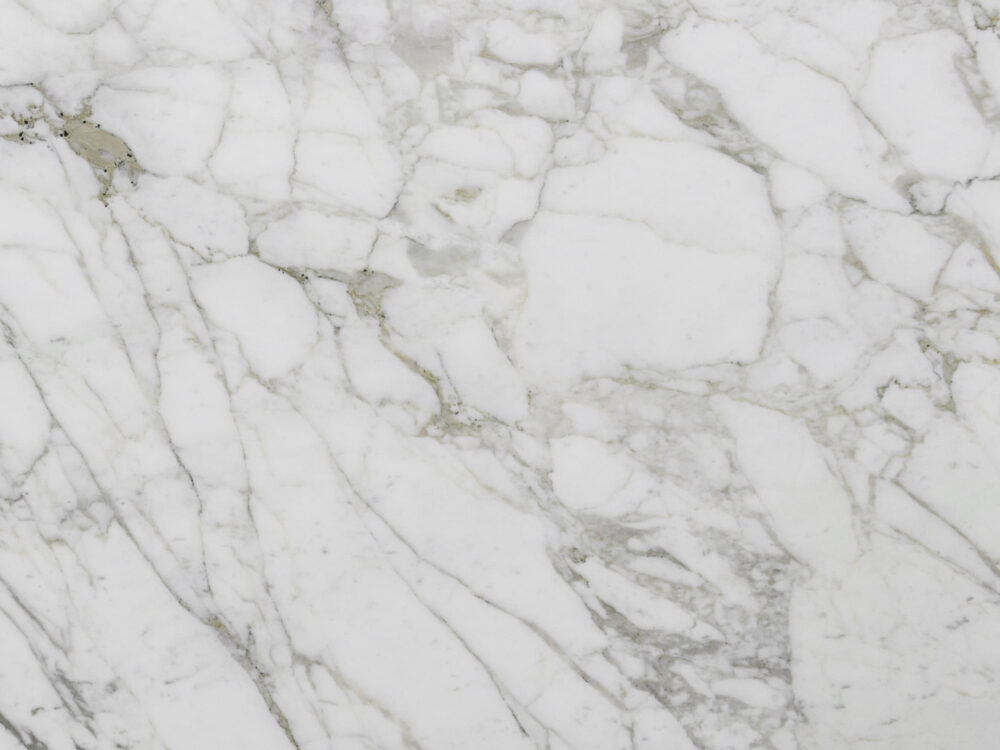
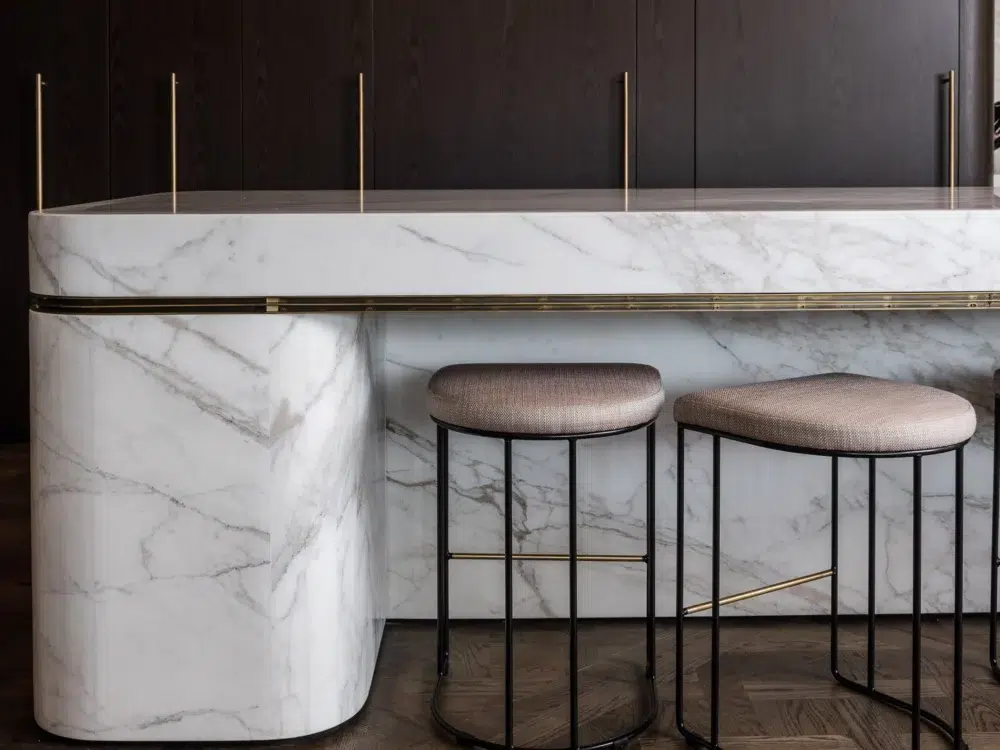
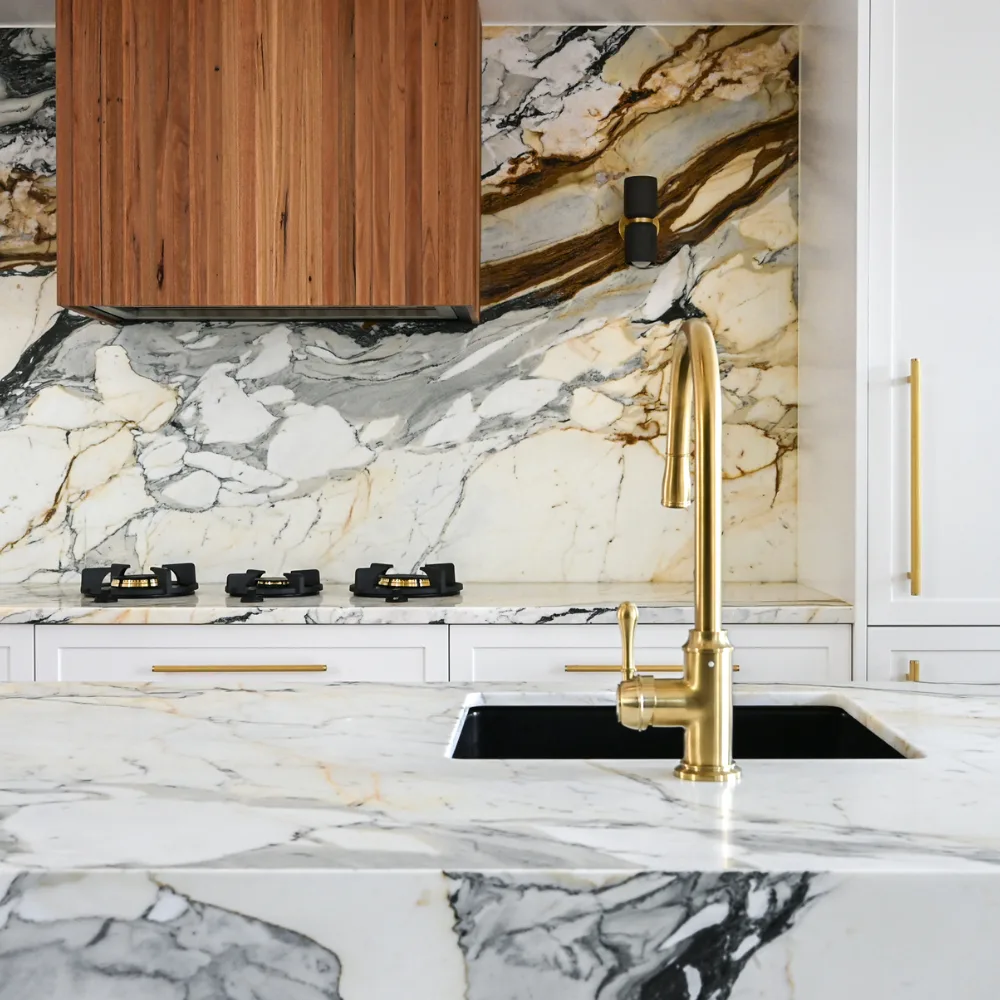
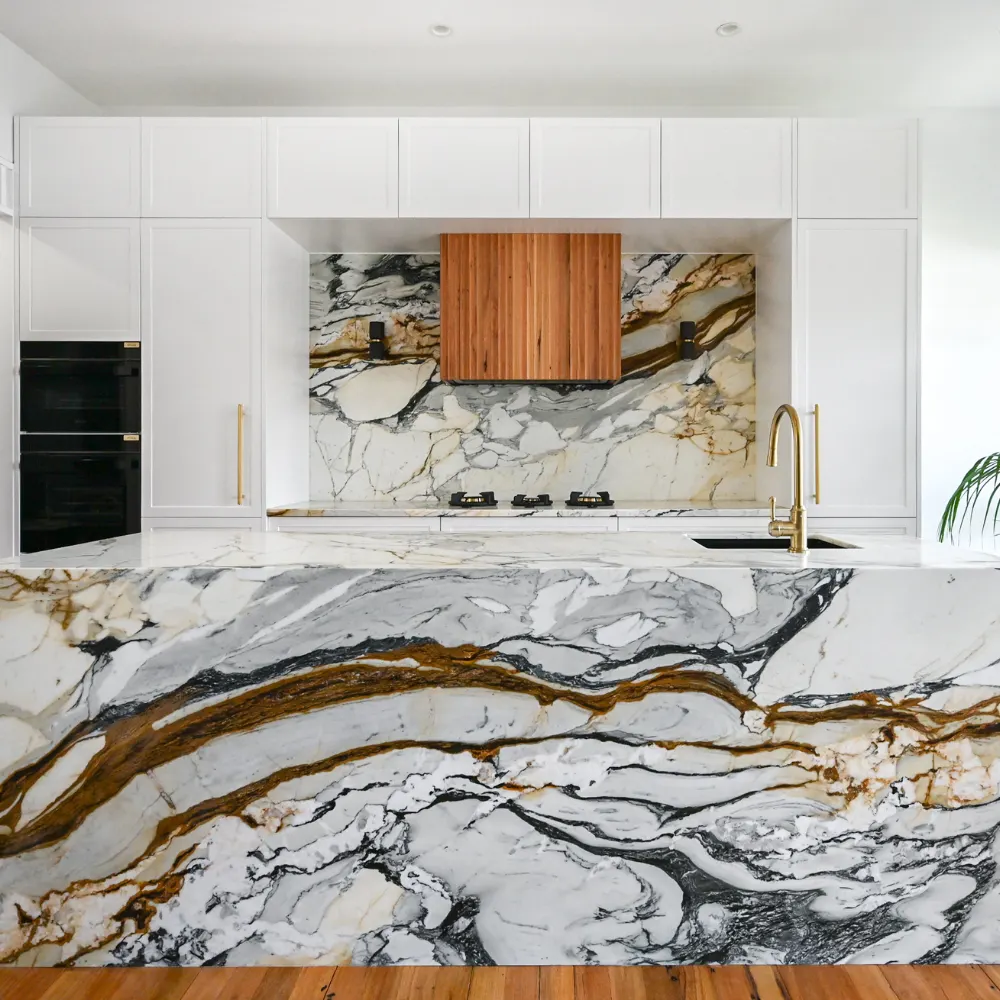
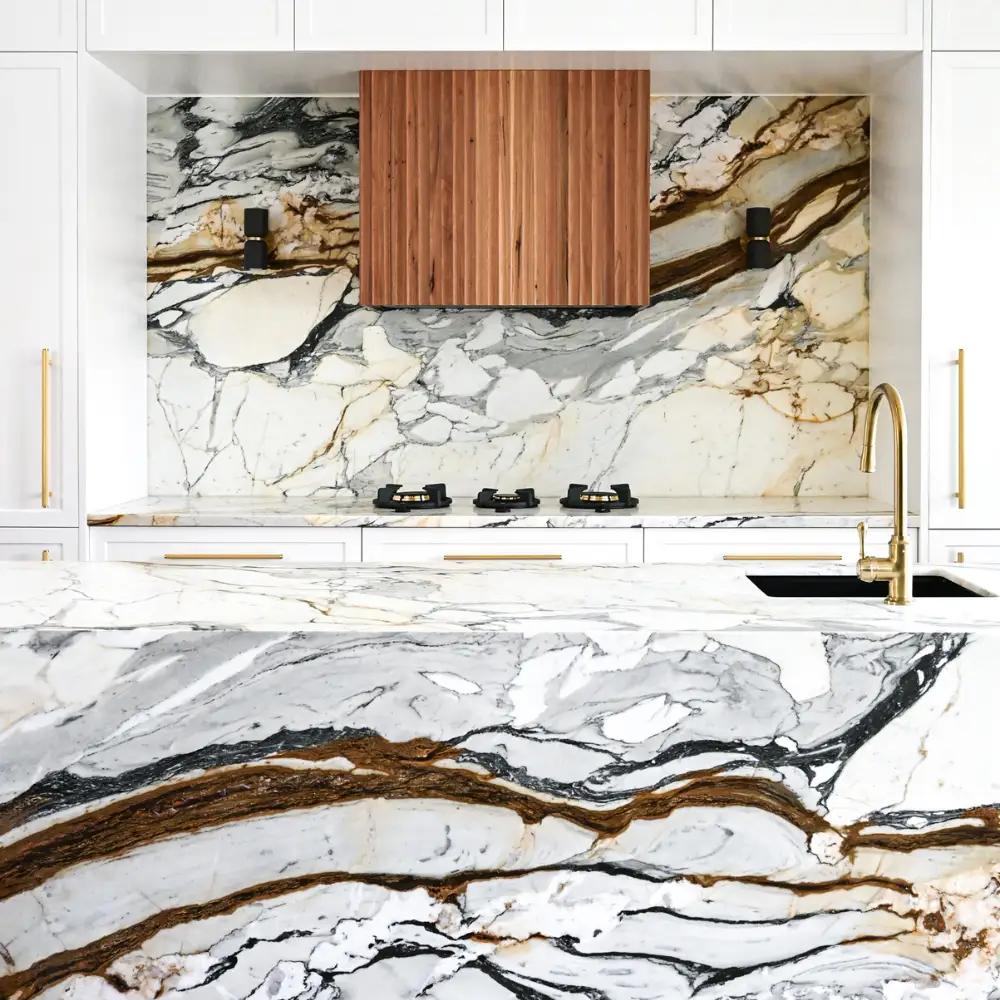
Calacatta Vagli is an Italian marble with a warm, creamy white base and grey and gold veining that breaks into a brecciated, fragmented pattern rather than running in straight lines. Quarried in the Vagli area of Tuscany, part of the historic Carrara marble region, each slab carries its own movement, so no two are alike.
The scattered gold and grey veins give the surface real depth, catching the light through the day and reading as a soft, warm block of colour across a room. As a marble it is porous and softer than quartzite or granite, so it can etch from acidic spills and benefits from sealing every one to two years, with spills wiped up promptly.
Best for: kitchen islands, benchtops, feature walls, shower niches and fireplace surrounds.
It pairs well with timber cabinetry, brass fixtures and warm, natural materials. See the current Calacatta Vagli slabs in person at our Greenacre or Beresfield showroom, since photos do not capture the depth of the veining.
