Sinterra Porcelain

Project Showcase: SinTerra Porcelain x Studio Hiyaku

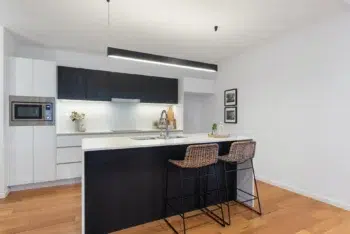
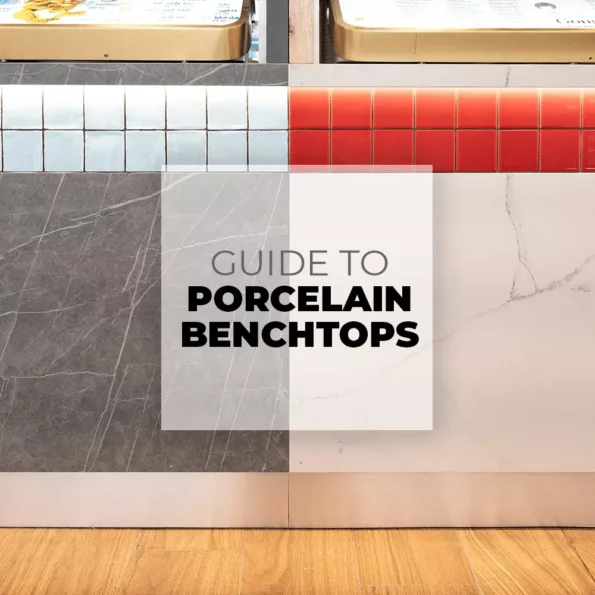
Project Showcase: Sinterra Porcelain x Gongcha + Hotstar Paramatta We recently partnered with Sunny Liu of Studio Hiyaku to revitalize Gongcha + Hotstar Paramatta with our porcelain benchtops. The client wanted a complimentary design for the side-by-side eateries, and the contrast in dark and light-colored porcelain panels was a perfect way to create synergy between the stores. Our Sinterra Slabs Range Zena Porcelain White Fantasy Porcelain Grigio Alexis Porcelain Montpellier Porcelain View All Our Porcelain Slabs Range Paonazzo Porcelain Palazzo Oro Porcelain Monte Blanco Porcelain Estremoz Porcelain View All Project Showcase: SinTerra Porcelain x Studio Hiyaku To accompany the porcelain panels, Sunny used a combination of timber, black metal, and blue and red tiles. The tiles add a lively splash of color to draw the eyes to where the delicious smells lead your nose. This client needed a long-lasting material that can stand the test of splashes and scratches that accompany a busy food outlet with a high volume of customer traffic. Sunny chose to use our Sinterra Porcelain panels  because, “They’re durable, reasonably priced and look seamless. The client required a highly functional material, but didn’t want to compromise on the aesthetic of the stores.” Porcelain slabs and panels are an excellent material for any application that undergoes wear and tear. As an extremely dense and non-porous material, porcelain slabs are fire and heat-resistant, waterproof, and resistant to chemicals. Read more about the benefits of porcelain slabs here. Come and view our stunning range of porcelain slabs on display in our Showroom. Find the Perfect Stone for Your Project Not sure which stone will suit your kitchen, bathroom, or outdoor space? Explore our curated selection of natural stone slabs and get expert advice on the best choice for your design. View our Range Studio Profile: Studio Hiyaku is a design studio based in Sydney. Stemming from the Japanese concept of “Hiyaku” which symbolises kinetic energy, Studio Hiyaku provides architectural design solutions that are stable, minimal, yet unrestrictive. Related Posts

CONTINUE READING ➞
Project Showcase: Omega Black Quartzite x Culina Design Group

A Designer’s Guide to Porcelain Benchtops | Avant Stone

A Designer’s Guide to Porcelain Benchtops There’s a reason why porcelain benchtops have become one of the most sought-after benchtop materials in Australia. But what exactly is porcelain and why is it a go-to in the world of kitchen design in particular? This guide tells you everything you need to know about porcelain benchtops. Our Porcelain Slabs For Benchtops View All Our Porcelain Slabs For Benchtops View All Our Porcelain Slabs For Benchtops View All Our Porcelain Slabs For Benchtops View All What is porcelain? Porcelain is a ceramic material composed of various materials including clay, metals, powders, minerals, and glass pigments among others. The process of making porcelain was discovered in China over two thousand years ago, which involved using a baking process to bond the materials together to create a hard and glass-like stone material. Because porcelain is ultra-compact, it’s also known as a sintered compact surface. Find the Perfect Stone for Your Project Not sure which stone will suit your kitchen, bathroom, or outdoor space? Explore our curated selection of natural stone slabs and get expert advice on the best choice for your design. View our Range How are porcelain benchtops made? The process of creating porcelain has evolved over time with advanced engineering and technology, allowing us to create large porcelain slabs and panels. This process is called sintering, whereby powdered clay, colored pigments, and other raw materials are fused together using extreme pressure and heat. This accelerated process creates a non-porous, extremely hard, and virtually indestructible surface that offers all the qualities you need for the perfect benchtop surface. Because porcelain is composed of many fine particles, porcelain slabs and panels can be formed with different textures ranging from smooth to bumpy. They can also have designs printed onto the surface to mimic materials such as marble, concrete, and limestone. What are the benefits of porcelain benchtops? Porcelain benchtops share the same benefits as other engineered stones, but also offer other advantages that you can’t find in other stones. It’s pretty much indestructible The sintering process used to make porcelain slabs make it extremely dense, hard and scratch-resistant. It also has high density and low porosity, making it highly resistant to stains and absorbing liquid – an excellent choice for kitchen benchtops where hygiene is a priority. It’s chemical resistant There’s no need to worry about damage and stains from chemicals and acidic liquids – great for splash-proof areas. It’s UV resistant Porcelain has a high resistance to UV light, so you don’t have to worry about outdoor BBQ tiles and benchtops fading in direct sunlight. It’s versatile and beautiful Porcelain panels and tiles are great for use as surface cladding. Whether it’s on walls, doors or kitchen cupboard fronts, porcelain tiles provide the practicality you need in a quality surface and the beauty to create a space you truly love. What can porcelain panels be used for? The benefits of porcelain make it an excellent contender for a range of applications, including: Wall panels Kitchen benchtops Flooring with heavy traffic Exterior cladding Outdoor flooring Bathroom walls and wet areas At Avant Stone, we use Sinterra porcelain slabs which offer designers the perfect combination of functionality and natural beauty. Come and view our stunning range of porcelain slabs on display in our Showroom. Related Posts

CONTINUE READING ➞
omega black

Project Showcase: Omega Black Quartzite x Culina Design Group

Project Showcase: Omega Black Quartzite x Culina Design Group Splashback & BenchAs an industry leader in luxury interior design, Culina Design Group creates bespoke interiors that truly reflect a client’s vision and personality. We collaborated with Culina Design Group on a new build project using the versatile and multi-functional omega black quartzite. Although this was a new build, the client wanted to create a home interior that is both traditional and contemporary. Our Stone Slabs Range View All Omega Black Quartzite Terri Culina, the Principal Designer at Culina Design Group, chose to use the black omega quartzite as it was the perfect stone to add a generous splash of traditional home design to a modern space.“The black omega immediately caught our attention and we knew it was the perfect stone for this job. The texture and feel of the black omega is stunning, and I’ve never used a stone that works so well across different styles. It has made quite an impact on the market since we completed this project! ” Terri used omega black slabs in the kitchen and bathroom. In the kitchen, the omega black was accompanied by a timber veneer kitchen, a brass mesh antique mirror and Perrin & Rowe kitchen tapware – but the omega black kitchen island is the most striking feature of the space. In the bathroom, she used Astra Walker Tapware to accentuate the elegance of the stone. The beauty of quartzite is that it’s an extremely durable and functional stone. It’s resistant to heat, fire, stains, and chemicals, giving it an unerring ability to withstand wear and tear. “The client loves the omega black quartzite because it’s totally maintenance-free – they don’t have to worry about scratches, etches, or stains.” Come and view the stunning omega black quartzite in our centrally-located stone gallery. Find the Perfect Stone for Your Project Not sure which stone will suit your kitchen, bathroom, or outdoor space? Explore our curated selection of natural stone slabs and get expert advice on the best choice for your design. View our Range Designer Profile: Terri Culina is the Principal Designer at Culina Design Group – a luxury interior design firm based in Sydney. Terri’s design philosophy is centered around creating spaces in which her clients feel emotionally connected to the spaces they live in. Related Posts

CONTINUE READING ➞
Quartzite Slabs

A Complete Guide to Quartzites

A Complete Guide to Quartzites Quartzite is an extremely hard, non-foliated metamorphic rock that is composed primarily of the mineral quartz. With durability, exquisite patterns, and a lustrous finish, quartzite slabs have the longevity of granite and the aesthetic of marble, making it the stone of choice for many architects and designers. Let’s take a closer look at why quartzite is one of nature’s finest materials. Our Quartzite Slabs For Benchtops View All Our Quartzite Slabs For Benchtops View All Our Quartzite Slabs Range View All Our Quartzite Slabs Range View All What is quartzite? Quartzite begins its geological life as sand grains. Over several million years, the grains are compressed and bond together to form quartz sandstone. Tectonic compression creates pressure which buries the sandstone grains deeper under layers of rock. With enough heat, they melt, recrystallize, and cement together with silica and calcite. The result is an intricate network of quartz fused together to create one of nature’s most dense and durable stones. Find the Perfect Stone for Your Project Not sure which stone will suit your kitchen, bathroom, or outdoor space? Explore our curated selection of natural stone slabs and get expert advice on the best choice for your design. View our Range Man-made quartz vs quartzite Quartzite is often confused with the similar-sounding man-made quartz, but each material has completely different properties. Quartzite is a natural metamorphic stone formed within the earth, whereas quartz is a reconstituted man-made material composed of pieces of ground quartz, resin, and polymers. The reconstituted properties of quartz cause it to be much less heat and scratch resistant than quartzite. Due to the use of resin and polymers in man-made quartz, the product is not UV stable, meaning the colors will fade and yellow. Natural quartzite, on the other hand, is UV stable and will hold its finish for many years to come. What makes quartzite unique? Great architectural designs create harmony between aesthetic, functionality and durability. Quartzite ticks all of these boxes, making it an extremely versatile material. Aesthetic Quartzite is not just a pretty face. Due to the long metamorphic process, it takes to form, quartzite measures at 7 on the Mohs Hardness Scale. To put this into perspective, most quartzite slabs are harder than glass or a knife blade, and slightly more durable than granite and steel. As long as it’s sealed with a high-quality impregnating sealer, quartzite will last a lifetime. Durability Quartzite is not just a pretty face. Due to the long metamorphic process, it takes to form, quartzite measures at 7 on the Mohs Hardness Scale. To put this into perspective, most quartzite slabs are harder than glass or a knife blade, and slightly more durable than granite and steel. As long as it’s sealed with a high-quality impregnating sealer, quartzite will last a lifetime. Functionality Quartzite is low-porous, low-maintenance, and easy to clean, making it an excellent contender when choosing a material for a stylish outdoor bar or pool area. It’s also popular in kitchens, particularly for those who like to cook or host. The density of quartzite means you don’t have to worry about scratching a benchtop while chopping food or etching it with acidic ingredients. Why choose quartzite instead of marble or granite? Quartzite is harder than marble and a better alternative if durability is a top priority. Although granite is highly durable and functional, quartzite has more exquisite patterns and colors if you are looking for a combination of durability and aesthetic. At Avant Stone, we pride ourselves on having the highest quality quartzite slabs in Sydney. Natural stones are best viewed in person, so come and visit us in our centrally-located stone gallery to see and feel the quality of our quartzite slab collection for yourself.     Related Posts

CONTINUE READING ➞
porcelain countertops

Porcelain vs. Granite Benchtops: Which Is Best?

Porcelain vs. Granite Benchtops: Which Is Best? Deciding between porcelain and granite for kitchen benchtops depends on your style and kitchen use. Porcelain offers a modern look with a range of colours, boasting durability, ease of cleaning, and scratch resistance. It’s ideal for those seeking a contemporary design with minimal upkeep. In contrast, granite benchtops exude classic elegance, featuring natural variations in colour and pattern. They suit those who prefer a traditional kitchen aesthetic and are willing to invest in its timeless appeal. Your lifestyle, cooking habits, and kitchen’s wear and tear play a significant role in this choice. Do you lean towards a traditional charm or a sleek, modern vibe? The decision between porcelain’s modern ease and granite’s enduring beauty ultimately aligns with your personal preferences and practical needs. Both materials have their unique benefits, making the right choice a matter of matching them to your lifestyle and kitchen’s design requirements. Let’s discover the perfect benchtop for your kitchen! Our Stone Slabs Range View All Our Stone Slabs Range Silver Patagonia Quartzite Silver Patagonia Quartzite Sierra Wave Granite Sierra Wave Granite Patagonia Retro Granite Patagonia Retro Granite Iceborne Quartzite Iceborne Quartzite View All Our Granite Slabs for Benchtops View All Our Granite Slabs for Benchtops View All Our Porcelain Slabs For Benchtops View All Our Porcelain Slabs For Benchtops View All Porcelain Benchtops Composition and Manufacturing Process Porcelain benchtops are crafted from a mix of clay, minerals, and feldspar, undergoing a rigorous manufacturing process. This blend is finely milled, shaped into slabs, and then fired at high temperatures, resulting in a robust and dense material. The outcome is a non-porous surface, highly resistant to heat, stains, and scratches, offering both practicality and a sleek, modern look. This unique composition ensures porcelain benchtops are both durable and visually appealing, with a variety of colour options to suit any kitchen design. Durability and Resistance Porcelain benchtops stand out for their impressive resilience and durability. Their non-porous nature makes them resistant to stains, moisture, and bacteria, ensuring easy upkeep and a smooth surface. These benchtops are also highly resistant to heat and scratches, maintaining their pristine appearance over time. Ideal for busy kitchens, porcelain benchtops withstand daily wear and tear without warping or discolouring, combining functionality with aesthetic appeal for modern kitchen spaces. Colour Options and Patterns The extensive range of colours and intricate designs available in porcelain benchtops allows homeowners to customize their kitchen spaces uniquely. From classic neutrals to bold hues, and from simple patterns to complex designs mimicking natural stone or contemporary styles, porcelain offers immense versatility. This adaptability makes it a prime choice for those seeking both practicality and the freedom to express their creative vision, seamlessly blending with any kitchen décor to create a personalized and visually stunning cooking environment. Versatility in Kitchen Styles Porcelain benchtops adapt effortlessly to a variety of kitchen styles, whether you’re aiming for a sleek, modern look or a more traditional, timeless ambience. In modern kitchens, they contribute to a clean and sophisticated atmosphere, enhancing minimalist designs. Conversely, in more traditional or rustic settings, porcelain can mimic natural stone, adding an element of elegance. Their wide array of colour choices, styles, and finishes make porcelain benchtops a versatile and stylish option, suitable for diverse homeowner preferences and kitchen themes. Find the Perfect Stone for Your Project Not sure which stone will suit your kitchen, bathroom, or outdoor space? Explore our curated selection of natural stone slabs and get expert advice on the best choice for your design. View our Range Granite Benchtops Composition and Manufacturing Process Granite benchtops, known for their natural beauty, are formed from quartz, feldspar, and mica. This rock solidifies and cools deep within the Earth, creating granite’s unique structure. Quarried in large blocks, these are then cut into slabs, unveiling their characteristic granular patterns. Polished to accentuate a range of hues and mineral variances, granite’s durability increases, making it resistant to wear, heat, and scratches. Durability and Resistance Renowned for their solidity, granite benchtops are a durable choice for kitchens. Composed of hard minerals like quartz and feldspar, they resist dents, scratches, and impacts. Their dense structure offers excellent heat resistance, ideal for placing hot items directly on the surface. Properly sealed, they also repel spills and stains, maintaining both their beauty and functionality over time. This resilience makes granite an ideal option for adding a long-lasting and stunning element to kitchens. Colour Options and Patterns Granite benchtops offer a broad spectrum of colour options and intriguing designs. Their natural composition results in an array of colours, ranging from subtle earth tones to bold, dramatic hues. Each slab is unique, displaying various patterns, swirls, and speckles due to its mineral content. Whether you prefer classic black and white or warm brown and beige tones, granite’s diverse designs cater to all tastes, blending durability with nature’s artistic beauty. Versatility in Kitchen Styles Granite benchtops are exceptionally versatile, seamlessly fitting into various kitchen designs. Their timeless elegance complements both modern and traditional settings, making them a popular choice among homeowners. In contemporary kitchens, granite adds a touch of sophistication with its smooth finish and colour diversity, while in traditional kitchens, it enhances the overall warmth and elegance. Suitable for high-traffic areas, granite’s robustness makes it an adaptable choice for any kitchen style, merging both functional and aesthetic appeal in a timeless material. Comparing Porcelain and Granite Benchtops Aspect Porcelain Benchtops Granite Benchtops Composition A blend of clay, minerals, and feldspar. Composed primarily of quartz, feldspar, and mica. Manufacturing Process Involves pressing and firing in kilns at high temperatures. Entails quarrying, cutting into slabs, and polishing. Durability Highly resistant to scratches, stains, and heat. Offers strong resistance to scratches, heat, and general wear. Resistance Non-porous, offering resistance to moisture and bacteria. Less porous, and stain-resistant when properly sealed. Colour Options Offers a wide range of colours, patterns, and finishes. Features a diverse palette with natural variations and unique patterns. Versatility in Styles Highly adaptable to contemporary and modern kitchen designs. Exudes timeless elegance,

CONTINUE READING ➞
porcelain benchtops

The Pros and Cons of Porcelain Benchtops | Avant Stone

The Pros and Cons of Porcelain Benchtops | Avant Stone In today’s modern kitchen designs, the choice of benchtop material plays a pivotal role. Among the plethora of options available, porcelain benchtops have gained significant popularity. Known for their sleek finish and robust performance, they are often considered a top choice for many homeowners. However, like any material, porcelain benchtops come with their own set of advantages and disadvantages. This comprehensive guide aims to explore the pros and cons of porcelain benchtops, aiding you in making an informed decision for your kitchen. Our Porcelain Slabs For Benchtops View All Our Porcelain Slabs For Benchtops View All Our porcelain Slabs For Benchtops View All Our porcelain Slabs For Benchtops View All Factors to Consider Before Selecting Porcelain Benchtops Selecting the right benchtop for your kitchen requires careful consideration of several factors, especially when contemplating porcelain Assessing Your Design Aesthetic: Porcelain benchtops are renowned for their vast range of styles and finishes. They offer the unique ability to replicate the appearance of natural stones like marble or granite. This feature allows homeowners to achieve a high-end look without the associated costs and maintenance of natural stone. Understanding Durability Requirements: One of the key strengths of porcelain is its durability. It resists scratching, chipping, and heat, making it an ideal choice for kitchens that see a lot of action. However, understanding how this durability aligns with your kitchen’s daily use is crucial. Maintenance and Care: Porcelain’s low maintenance requirements are a significant draw for busy homeowners. Unlike natural stone, it doesn’t require regular sealing. Routine cleaning with non-abrasive cleaners is typically enough to maintain its pristine condition. EBudgetary Considerations: While porcelain offers numerous benefits, it can be a more expensive option compared to other materials. It’s important to balance your budget with your expectations for quality and longevity. Installation Expertise: The installation process for porcelain benchtops is crucial. It requires precision and skill, often necessitating the expertise of a professional. Incorrect installation can lead to issues such as cracking or chipping. Find the Perfect Stone for Your Project Not sure which stone will suit your kitchen, bathroom, or outdoor space? Explore our curated selection of natural stone slabs and get expert advice on the best choice for your design. View our Range Pros of Porcelain Benchtops Porcelain benchtops bring a host of advantages that make them a preferred choice for many: Exceptional Durability Porcelain’s hard surface is highly resistant to scratches, chips, and heat. This durability makes it ideal for kitchens, where the benchtop often takes the brunt of daily activities. Ease of Maintenance Unlike some natural stone options, porcelain benchtops do not require frequent sealing. Their non-porous nature means spills and stains can be easily wiped away, simplifying the cleaning process. Aesthetic Flexibility With technology advancements, porcelain can now mimic various natural stone textures and patterns. This versatility allows it to fit seamlessly into any kitchen design, from ultra-modern to traditional. Hygienic Surface The non-porous nature of porcelain makes it resistant to bacteria and mold growth, a crucial factor for kitchen surfaces. This hygienic aspect ensures a healthier environment for food preparation. UV Resistance Porcelain is highly resistant to UV light, ensuring that the color and pattern of the benchtop don’t fade over time, even when exposed to sunlight. Cons of Porcelain Benchtops Despite its many benefits, there are some considerations to keep in mind with porcelain benchtops: Higher Cost The manufacturing process of porcelain benchtops, along with their durability and aesthetic appeal, often places them at a higher price point compared to other materials. Complex Installation Porcelain slabs require careful handling and precise installation. This process often necessitates experienced professionals, potentially increasing overall costs. Repair Challenges In the event of damage, such as a deep scratch or chip, repairing porcelain can be difficult. Sometimes, the affected area may need replacement, which can be costly and time-consuming. Limited Edge Profiles Due to its manufacturing process, there can be limitations in the edge profiles available for porcelain benchtops, which might restrict some design preferences. Cold Touch Porcelain does not retain heat, which means the surface can feel cold to the touch. This characteristic might be a consideration for those who prefer a warmer feel in their kitchen workspace. Conclusion Porcelain benchtops offer a compelling blend of aesthetics and functionality, making them a sought-after choice for modern kitchens. Their durability, low maintenance, and design versatility are significant advantages. However, factors like cost, installation complexity, and repair considerations should be carefully weighed. In making your decision, consider how these pros and cons align with your lifestyle, budget, and kitchen use. With the right choice, a porcelain benchtop can not only elevate the look of your kitchen but also provide a long-lasting and practical surface for years to come. Related Posts

CONTINUE READING ➞
Granite Benchtop

Granite Countertops Vs. Marble Countertops: Which Countertop Should You Pick

Granite Countertops Vs. Marble Countertops:Which Countertop Should You Pick Choosing the right countertop can make or break your kitchen or bathroom design. Two top choices are granite and marble. Both are beautiful and long-lasting, but they have different pros and cons. In this article, we’ll compare granite and marble in key areas like cost, durability, and maintenance. Our goal is to help you make the best choice for your home. Whether you’re a homeowner, a designer, or a builder, this guide is for you. Our Granite Slabs for countertops View All Our Granite Slabs for countertops View All Our Marble Slabs For Countertops View All Our Marble Slabs For Countertops View All Our Stone Slabs Range View All Our Stone Slabs Range View All Find the Perfect Stone for Your Project Not sure which stone will suit your kitchen, bathroom, or outdoor space? Explore our curated selection of natural stone slabs and get expert advice on the best choice for your design. View our Range Granite Countertops Vs. Marble Countertops Visual Appearance Granite Countertops: Granite is renowned for having a speckled look, which results from a complicated pattern of various minerals mixed together. It has a substantial and natural appearance that may go with many different design trends. Marble Countertops: On the other hand, marble is a symbol of elegance and refinement. A timeless and beautiful appearance is provided by its smooth surface and subtle veining. No matter whether you’re thinking about a marble splashbacks or a marble countertop, its visual appeal will undoubtedly improve how lovely your place looks. Comparison: Marble emanates a sophisticated and traditional elegance, as opposed to granite, which has a more raw and earthy aspect. Depending on your own preferences and the general design motif of your area, you will have to decide between the two options. Both granite and marble have their own distinct beauty and charm when it comes to aesthetics. However, being aware of the minute variations between the two might assist you in selecting the one that best suits your tastes and style. Durability & Strength Strength and durability are important aspects to take into account when selecting a countertop material. Both granite and marble have advantages and disadvantages in this respect, and being aware of them will help you decide which is ideal for your requirements. Granite Countertops: Granite is recognized for being very strong and scratch-resistant. It’s a great option for kitchen counters, which see everyday wear and tear due to frequent usage. Marble Countertops: Marble is more prone to scratches and stains than granite since it is softer. However, a marble countertop or marble splashbacks may last a lifetime with regular maintenance and judicious usage. Comparison: Granite can be a better option if durability is your top need. However, marble may be a magnificent addition to your house if you’re attracted to its opulent look and are prepared to make the necessary maintenance investments. Colour Variations Your space’s atmosphere may be greatly impacted by the color of your countertops. Although granite and marble both come in a variety of colors, there are several key distinctions to keep in mind. Granite Countertops: Granite comes in a variety of colors, including dark blacks, vivid reds, and soft greens. Its flecked look gives its color pallet depth and complexity, enabling distinctive and individualized design alternatives. Marble Countertops: Even though marble is often linked with white and gray hues, it may also be found in more unusual hues like green, pink, and blue. Marble’s delicate veining gives it a subtle pattern and improves its aesthetic appeal. Comparison: Understanding the differences in colour between granite and marble will help you choose the ideal material for your Marble Backsplash or countertops, whether you like the strong and varied colour selections of granite or the delicate and graceful colours of marble. To know more you can also check our Blog “Reasons to choose granite countertops”. Heat and Stain Resistance Countertops in bathrooms and kitchens are subjected to a variety of factors, including heat and potentially stain-causing chemicals. Making a choice requires knowledge of how granite and marble react to various variables. Granite Countertops: Granite is a fantastic material for places close to stovetops or ovens since it is very heat resistant. When properly sealed, its thick structure also helps it resist stains. Granite could be your first choice if you like cooking and require a surface that can endure hot pots and pans. Marble Countertops: Marble is also heat resistant, but since it is porous, it may be more prone to stains. Lemon juice or vinegar, for example, may etch the surface and leave a mark. However, a marble splashbacks or countertop may keep its spotless look with appropriate sealing and fast cleaning of spillage. Comparison: Granite can be a better option if minimal maintenance and excellent heat and stain resistance are your top priorities. However, marble may still be a good choice for your home if you’re attracted to its distinctive aesthetics and are prepared to give it a little additional attention. Conclusion Aesthetics, toughness, color variety, heat resistance, and stain resistance must all be carefully considered when deciding between granite and marble worktops. Marble adds a sense of richness and elegance while granite gives durability and a broad variety of hues. Your decision may also be impacted by certain requirements, such as a Marble Backsplash that gives your kitchen a posh feel. Ultimately, each material has a distinct appeal and utility. The ideal decision for your house will depend on your own tastes, way of life, and design objectives. Whether you choose the timeless beauty of marble or the earthy appeal of granite, your countertops will unquestionably improve the aesthetics and use of your room. Frequently Asked Questions (FAQs) What is better, marble or granite countertops? Both materials have their merits, but the “better” option depends on your needs. Granite is generally more durable and less porous, making it better for high-traffic areas and less prone to staining. Marble, on the other hand, offers unparalleled elegance but requires more maintenance. Which is more expensive, marble or granite countertops? Marble tends to be more expensive than

CONTINUE READING ➞

The Pros & Cons of Marble Splashback

The Pros & Cons of Marble Splashback Every little thing counts when designing the kitchen since it serves as the social hub of the house. The Splashback is one of the essential components that may make or break the beauty of your kitchen. Marble Splashback has become one of the most popular choices for many homeowners among the numerous materials available. However, is it the best option for you? This in-depth study will examine the world of marble backsplash, contrasting it with other natural stones, and assessing its advantages and disadvantages. Therefore, grab your seat belts, and let’s explore the world of beauty, style, and utility that marble gives to your kitchen. Our Marble Splashback For Benchtops View All Our Marble Splashback For Benchtops View All Our Marble Splashback Range View All Our Marble Splashback Range View All Factors to Consider Before Selecting Marble for Splashback Before selecting a marble splashback, it’s crucial to consider several aspects that could significantly impact your kitchen’s functionality and style: Aesthetic Compatibility: Marble, with its unique veined patterns and rich textures, offers significant visual appeal. However, it’s essential to ensure that the marble splashback you choose complements your kitchen’s overall theme. The natural elegance of marble should align with your interior design to create a cohesive look. Budget Constraints: High-quality marble can be expensive. When choosing a marble splashback, it’s important to consider not only the initial purchase cost but also long-term maintenance expenses. Budgeting effectively will help you manage costs without compromising on quality or aesthetics. Maintenance and Care: Marble’s beauty comes with a need for regular maintenance. Its porous nature makes it prone to staining and etching, requiring regular sealing and careful cleaning. If high maintenance is a concern, you might want to explore more low-maintenance materials that still offer a similar aesthetic appeal. Durability and Resistance: Marble is heat-resistant, making it an excellent choice for areas around stoves. However, it can be prone to chipping or cracking upon impact. Consider the installation area and expected wear to ensure that marble is a practical choice for your splashback. Environmental Considerations: The extraction and processing of marble can have significant environmental impacts. If sustainability is a key concern for you, it’s worth researching the sourcing practices of suppliers and considering materials with lower environmental footprints. Choosing a marble splashback involves balancing aesthetic desires with practical considerations such as budget, maintenance, durability, and environmental impact. By carefully evaluating these factors, you can select a splashback that enhances your kitchen’s beauty while fitting your lifestyle and values. Marble vs. Other Natural Stones: Which One is Better for Your Splashback? When deciding on the best material for your kitchen splashback, it’s important to weigh the characteristics of marble against other popular natural stone options. Each stone has its unique attributes, advantages, and considerations. Granite: Known for its robustness, granite offers a vast spectrum of colours and patterns, providing a highly durable and low-maintenance option for splashbacks. Unlike marble, granite doesn’t easily scratch or etch, making it suitable for high-traffic kitchens. Quartzite: Quartzite is appreciated for its hardness and resistance to heat and scratches, characteristics that are superior to marble’s. It showcases a stunning blend of colours and patterns that can rival marble’s aesthetic. Quartzite’s durability makes it an excellent choice for splashbacks, though it lacks marble’s unique veining and classic appeal. Limestone: Limestone provides a softer, more earthy appearance compared to marble. It offers a warm and inviting look but is more porous and susceptible to staining and scratching. Limestone requires regular sealing and careful maintenance to preserve its beauty over time. Travertine: With its distinctive, timeless charm, travertine is another option for those who appreciate natural beauty. Like limestone, travertine is more porous than marble and may require frequent sealing to protect against stains and etching. By comparing these options, it becomes clear that choosing the perfect material for your backsplash is a subjective decision. Understanding the characteristics of each stone will help you make an informed choice, whether you opt for the timeless beauty of marble or the charm of limestone. Find the Perfect Stone for Your Project Not sure which stone will suit your kitchen, bathroom, or outdoor space? Explore our curated selection of natural stone slabs and get expert advice on the best choice for your design. View our Range Pros of Marble Splashback The allure of a marble backsplash is undeniable. It has been a favourite among homeowners and designers alike due to its natural beauty, unique patterns, and luxurious appearance. But what makes marble such a great material for a Splashback? Let’s explore the advantages of using marble in your kitchen, including its beauty, versatility, and more. Aesthetic Appeal Marble’s inherent elegance and classic beauty can transform a plain kitchen into a work of art. Each slab is distinct due to its unique veining and colour variations, giving your space a personalized touch. Water and Heat Resistance Marble can be used in various designs, whether you prefer a contemporary, minimalist look or a classic, ornate style. Its neutral colours and textures offer endless customization and creative possibilities. Investment Value Installing a marble splashback can significantly increase the value of your property. Its association with high-end design and luxurious appearance make it an attractive feature for potential buyers. Durability With proper care, marble is a strong and long-lasting material. It is a great choice for areas near stovetops and ovens due to its heat resistance. Uniqueness When you choose a marble Splashback, you are creating a work of art for your kitchen. Each slab is unique, adding to the individuality of your design and allowing you to express your style. Cons of Marble Splashback Even though stone splashback, from upkeep to expense. Maintenance Marble needs to be regularly sealed to prevent stains and etching. Its porous nature requires special attention and maintenance, making it susceptible to spills and acids. Cost High-quality marble can be expensive. The cost of the material itself and professional installation make it a less affordable option. Vulnerability to Damage While marble is resilient, it is prone to chipping and

CONTINUE READING ➞
Dolomite

The Ultimate Guide to Backlighting Stone

The Ultimate Guide to Backlighting Stone The translucent quality of some natural stones allows the use of backlighting to create scenic, expressive applications which cannot be replicated with any other natural or man-made product. Backlit stone can be used to create walls, benchtops, or tables that illuminate your kitchen, bathroom, or commercial setting. The types of stone often used are marble, onyx, and some quartzites and granites which have translucent quartz crystals in their composition. Our Stone Slabs Silver Patagonia Quartzite Sierra Wave Granite Patagonia Retro Granite Iceborne Quartzite View All Lighting – What to consider? We consulted with Peter from Cosmo Lighting Castle Hill about their recent project using our New York Marble and lighting from Cosmo Lighting Castle Hill to learn some of the insights on what relevant factors to consider when backlighting stone. Peter recommends that backlighting requires a multifaceted approach and planning in the design phase to achieve the best results, noting “[the LED] strips need to be installed in such a way that they are serviceable in the future, this means designing cabinets that have removable access panels but also are made in such a way as to not create shadows when the stone is lit”. Another helpful tip is to test the lighting setup once the stone is selected “As some stone is more translucent than others, you may have to use brighter LED”, in the featured New York Marble project Peter used 9.6 watts LED strip.Another important aspect to consider is the positioning of the lighting strips, in particular, the distance of the LED strip is from the stone, and how far apart each LED strip is. In order to achieve a consistent even glow, Peter explains that there needs to be a balance in the distance the LED strip is from the stone, and how far apart each LED strip is. To work this out, it is best to test with a small sample piece of stone and a few lengths of LED strip. If the right balance is not achieved the stone will have bands of light rather than a consistent even glow. Find the Perfect Stone for Your Project Not sure which stone will suit your kitchen, bathroom, or outdoor space? Explore our curated selection of natural stone slabs and get expert advice on the best choice for your design. View our Range The Art of Choosing Stone Any stone that is translucent in nature can be used, from the Avant Stone some of the unique stones we recommend for backlighting are: An important design consideration to keep in mind is to pick the stone that aesthetically works in the space, both with and without backlighting and see how the colours, lighting and other finishes in the space work well with the backlit stone. Project Credit Cosmo Lighting, Castle Hill. Nihil Rawal Director at Avant Stone Related Posts

CONTINUE READING ➞
Granite slab

How to Select the Perfect Granite Slab for Your Kitchen Project?

How to Select the Perfect Granite Slab for Your Kitchen Project? Selecting the ideal granite slab for your kitchen project is more than just picking a color that catches your eye; it’s about understanding the unique characteristics of this natural stone and how it can best complement your space. Granite slabs offer a combination of durability and beauty unmatched by other materials, making them a popular choice for kitchen benchtops worldwide, including Australia.   Factors to Consider Before Selecting Granite Slab For Your Kitchen Project Color and Pattern Consistency: Granite is renowned for its vast array of colors and intricate patterns. Consider whether you prefer a slab with a consistent pattern or one with more variation to add a unique character to your kitchen. Slab Thickness: The thickness of the granite slab plays a critical role in its durability and installation. Typically, slabs come in two thicknesses, 2cm and 3cm, each offering different benefits in terms of strength and application. Finish Type: Granite can be finished in several ways, including polished, honed, or leathered, each providing a different look and feel. Decide on the finish that best complements your kitchen’s design and your lifestyle needs. Sealing Requirements: While granite is naturally resistant to stains, certain slabs may require sealing to protect against spills and stains. Consider the maintenance required to keep your granite benchtop looking pristine. Budget: Granite slabs vary significantly in price based on their rarity, thickness, and finish. Set a realistic budget for your project while considering the long-term value granite adds to your home. Find the Perfect Stone for Your Project Not sure which stone will suit your kitchen, bathroom, or outdoor space? Explore our curated selection of natural stone slabs and get expert advice on the best choice for your design. View our Range How to Choose the Perfect Granite Slabs for Your Kitchen Selecting the right granite slab for your kitchen isn’t just about finding a color or pattern you love; it’s about understanding how that piece of natural stone will fit into the daily life of your home. When embarking on this journey, several nuanced considerations come into play: Visual Harmony Begin by assessing the overall aesthetic of your kitchen. Consider the colors of your cabinets, walls, and floor. A granite slab should not only match but enhance these elements. For a harmonious look, decide whether you’re aiming for a slab that stands out as the focal point or one that complements the existing decor subtly. Lighting Lighting plays a pivotal role in how the granite’s color and pattern are perceived. Natural light can dramatically alter the appearance of your granite benchtop, making it vital to consider the amount and type of light your kitchen receives throughout the day. A darker slab might look striking under ample sunlight but could appear overwhelming in artificially lit or smaller kitchens. Pattern and Color Consistency Granite slabs vary greatly in terms of pattern consistency and color distribution. Some slabs feature large, bold patterns, while others are more subtle. Consider how the slab’s pattern will flow across your kitchen counters and whether you prefer a dramatic statement piece or a more understated look. Finish The finish of your granite slab affects not just its appearance but also its maintenance and usability. Polished finishes are glossy and highlight the color and texture of the granite, whereas honed finishes offer a matte look that conceals scratches but can be more susceptible to staining. Leathered finishes provide a textured feel that hides fingerprints and smudges, making them practical for high-traffic areas. Slab Viewing and Selection Photos and samples can only tell you so much. To truly understand the beauty and intricacies of a granite slab, viewing it in person is essential. This allows you to see the full slab, inspect it for any imperfections, and visualize how it will integrate into your kitchen. Don’t hesitate to visit multiple suppliers to find the perfect piece. How to Care for and Maintain Your Granite Surfaces Maintaining the pristine condition of your granite surfaces requires a combination of regular care and mindful usage practices. Here’s how to ensure your granite kitchen benchtops remain beautiful and functional over the years: Daily Cleaning  For daily maintenance, use a soft cloth and a mild detergent or a cleaner specifically formulated for natural stone slabs. Avoid acidic cleaners, which can etch the surface, and abrasive pads, which can scratch the finish. Wiping up spills immediately will prevent potential staining, especially from acidic substances like wine, coffee, and citrus juices. Sealing Although granite is naturally resistant to moisture absorption, some lighter-colored slabs may be more porous and require periodic sealing. A simple water test—sprinkling water on the surface and observing how quickly it absorbs—can indicate whether your granite needs sealing. Consult with your fabricator or installer for recommended sealants and sealing frequency to protect against staining. Preventing Damage While granite is known for its durability, taking precautions can prevent unnecessary wear and tear. Use trivets or mats under hot dishes and cookware to avoid thermal shock. Cutting directly on granite is not recommended as it can dull your knives; always use a cutting board. Repairing Minor Damage In the event of small chips or scratches, repair kits are available for minor fixes. For more significant damage, professional restoration services can grind down and repolish the surface, restoring it to its original condition. Frequently Asked Questions (FAQs) Which granite slab is best for kitchen? The best granite slab for your kitchen combines the ideal blend of color, pattern, and durability to meet your aesthetic and functional needs. Popular choices often feature neutral tones with subtle patterns, offering versatility across various kitchen styles. Is it cheaper to buy a slab of granite? Buying a whole slab of granite can offer cost savings for large projects by reducing waste and matching patterns across seams. However, for smaller projects or single stone kitchen benchtops, remnants from larger slabs can provide a cost-effective alternative. Which Colour granite is best for kitchen? The best color for

CONTINUE READING ➞
Wishlist
Recently Viewed
Categories