Natural Stone Splashbacks / Blue Marble Slabs

Sintered Stone vs Other Countertops: A Complete Guide

What Is Sintered Stone and How Does It Compare to Other Countertops? What would be the perfect countertop for a kitchen or bathroom seemed to overwhelm people with the many available options. Sintered stone has recently hit the market, being one of the most competitive materials when considering resistance, aesthetic appeal, and functionality. Here is an article detailing what sintered stone really is, together with its key features, and how it matches up against other popular countertop materials like granite, quartz, and marble. Knowing the difference between each of these can help you make the perfect decision for your home. Our Sintered Stone Slabs Zena Porcelain White Fantasy Porcelain Grigio Alexis Porcelain Montpellier Porcelain View All Our Stone Slabs Range Silver Patagonia Quartzite Sierra Wave Granite Patagonia Retro Granite Iceborne Quartzite View All What Is Sintered Stone? Sintered stone is an artificially made surface created from the treatment of natural minerals under extremely high temperatures and pressure. In effect, it is able to mimic natural stone formation but does so in just a fraction of the time. There are no binders in sintered stone, unlike engineered stone countertops, which are basically held together by resins. This makes it very hard and not porous at all. How Is Sintered Stone Made? Sintered stone is created through a process of natural minerals subjected to extreme heat and pressure. It is the same process that occurs naturally to form stones but does so in an incredibly short amount of time. Used more and more in construction, the following is the in-depth process of how the sintered stone is created: Material selection This is the first process wherein the raw materials used are of high quality. They include quartz, feldspar, silica, natural mineral pigments, and other materials selected for their strength, hardness, and appearance. Grinding and Mixing The chosen minerals are ground into fine powder. This powder is further thoroughly mixed to achieve a uniform composition. The mix may also contain some percentage of recycled material, making the end product much more eco-friendly. Compaction The powdered mixture at this stage gets compacted using advanced technology under very high pressure. This compaction process assists in forming a dense slab that is also uniform, air pocket-free, and defect-free. Sintering Process Compact slabs are then subjected to very high temperatures, often above 1,200°C. The high-temperature process like this ends up bonding the minerals at a molecular level to provide great strength and cohesion. This is the sintering process used for this material. Cooling and Finishing The slabs, after sintering, are cooled slowly to ambient temperature. This slow cooling avoids unwanted stresses or thermal shocks in the material. The cooled slabs will subsequently be cut to size and finished with various surface treatments to achieve the desired appearance. Quality Control At every stage of production, quality checks are done to ensure that the finished product has maximum durability and aesthetic appeal, along with the required performance. Colour consistency, texture, and structural integrity are checked in every slab. Find the Perfect Stone for Your Project Not sure which stone will suit your kitchen, bathroom, or outdoor space? Explore our curated selection of natural stone slabs and get expert advice on the best choice for your design. View our Range Key Features of Sintered Stone Countertops Sintered stone countertops offer a range of impressive features that distinguish them from other materials. These features make them a preferred choice for homeowners and designers alike. Here are the key attributes: Durability Because sintered stone is extremely hard, it offers outstanding scratch, heat, and stain resistance. It is an ultra-resistant material, very suitable for high-traffic areas like kitchens and other busy spaces within a house. Unlike some natural stone countertops, a sintered stone countertop is less likely to chip or crack under daily wear and tear, ensuring a long-lasting surface that maintains its appearance over time. Nonporous Surface Due to its nonporous nature, sintered stone does not absorb liquids; hence, the risk of staining is almost low. This aspect creates a clean and easy-to-maintain surface that is very hygiene-friendly for food preparation areas. There is one very distinct advantage it has over many traditional natural stone countertops: it won’t soak up spills like they will if the sealants aren’t applied. Versatility Sintered stone slabs are versatile and fully varied in colour and finish. They can replicate the look of natural stone countertops, such as marble or granite innovations that deliver an authentic appearance, without necessarily having to put up with their upkeep. In addition, the sintered stone may also be specifically designed to provide character and modern designs that complement the newest interior design trends, thus offering flexibility to designers and home owners in achieving their desired look. Environmental Impact As this is made of natural minerals, sometimes with the element of recycled material, sintered stone happens to be an environmentally friendly material. The process has been designed to lower waste and environmental impact, making this a more sustainable option than many traditional engineered stone countertops. This kind of focus on sustainability carries exceptionally high relevance amidst exponentially increasing consciousness about the environment among consumers, hence adding another layer of appeal to sintered stone countertops. Comparing Sintered Stone to Other Countertop Materials To truly understand and appreciate the benefits of sintered stone, it will be necessary to compare it with some other popular countertop materials: granite, quartz, and marble. Sintered Stone vs. Granite: Durability and Maintenance Granite is considered one of the most beautiful and amazingly strong natural stones. However, granite, being porous in nature, needs to be sealed regularly to avoid staining and the growth of bacteria. This repeated maintenance is time-consuming and costly. In contrast, a sintered stone slab has a non-porous surface that does not require any type of sealing at all, which is much easier to maintain. This characteristic guarantees the hygiene and resistance to regular threats in any kitchen of the sintered stone. Not to mention, while granite might crack due to extreme heat, sintered stone handles

CONTINUE READING ➞
sintered Stone

How to Maintain Natural Stones in High-Traffic Residential Areas

How to Maintain Natural Stones in High-Traffic Residential Areas? Natural stones, with a touch of elegance and durability, help complement any home. Of particular interest, they are commonly used in areas with heavy foot traffic. However, maintenance is key to their survival. This guide covers essential care practices for natural stones slabs and tiles, be it in terms of regular cleaning, deep cleaning, or eco-friendly solutions. With these few simple tips, you will be able to keep your stone surfaces in all their beauty, making them one of the most beautiful features in your home. Our Stone Slabs Range for Countertops Rosado Quartzite Patagonia Sedona Granite Ijen Blue Quartzite Andor Dolomite View All Importance of Regular Cleaning and Maintenance Cleaning and caring for natural stones is the most vital process, which maintains the beauty and integrity of the natural stone. More foot-traffic areas will get dirty, grimy, or spill-prone, and permanent damage can easily occur with a little negligence. By cleaning the natural stone slabs regularly, you avoid build-up that can scratch and erode your natural stones surfaces. It also helps to detect problems, such as cracks or chips, at a very early stage for effective fixing. More so, well-maintained stone surfaces ensure that their natural glow and colour are retained, which works to emphasize the beauty of your home. This will not only increase the life expectancy of your natural stones but will also help to maintain a much healthier environment by reducing allergies and bacteria. Proper maintenance will save you huge repairs later down the line, and it ensures that your stone surfaces are always a very strong and beautiful part of your home. Spending some time on a regular basis cleaning and executing upkeep is required to hold on to the elegance and durability of your natural stones surfaces. Find the Perfect Stone for Your Project Not sure which stone will suit your kitchen, bathroom, or outdoor space? Explore our curated selection of natural stone slabs and get expert advice on the best choice for your design. View our Range Benefits of Proper Natural Stone Maintenance in High-Traffic Areas It becomes essential to take proper care of the natural stones surfaces subjected to heavy traffic in order to maintain their existence and overall appeal. Proper maintenance will definitely aid in keeping the beauty and functionality of the natural stone slabs and tiles longer and increasing their value. Higher Durability Regular maintenance will increase the life expectancy of a natural stone slab significantly. Keeping the dirt and grime from settling on the surface will reduce the occurrence of damage, thus increasing the life of your stone. This is very important in areas with high traffic where stones face constant use. Not only will it make the daily wear and tear easier to handle, but it will also be structural in nature, decreasing the frequency of replacements for stones. Increased Aesthetic Value Maintaining your natural stones tiles is the process of letting them appear in their natural luster and colour. This involves some regular cleaning and sealing to keep the stone looking nice and vibrant. This adds greatly to the aesthetic value of your house. This makes a huge difference, especially in high-traffic areas. Well-maintained stone surfaces will definitely come off as polished, sophisticated, elegant, and hospitable. Easier Cleaning Regular maintenance will make the cleaning of the natural stones slabs easier. On regularly cleaned and sealed surfaces, dirt and spills will not have the opportunity to penetrate into the stone so easily. Daily cleaning will then take much less time to be effective. With properly maintained natural stone tiles, you are assured that everyday cleaning is not going to be a problem, and your home will be clean with minimal efforts. Cost Savings on Repairs Proper maintenance will point out minor issues, such as cracks or chips, and help you fix them before they turn into major problems. You avoid extensive damage and save on costly repairs or replacements. This becomes the cost-effective way of regular maintenance of natural stones tiles for protecting an investment in your home. Addressing these issues early enough prevents them from escalating, so that your stone surfaces are kept in good condition without high repair costs. Increased Value of Homes Well-maintained stone surfaces can improve the resale value of your home. No doubt, prospective buyers will be impressed with the beauty and durability of well-maintained slabs and tiles. This means that such surfaces would enhance the marketability of the property at a better price. A home with pristine natural stone surfaces is considered a sign of good maintenance; thus, more prospective customers will be attracted to such a property at a potentially higher market value. A Healthier Living Environment Cleaning natural stones tiles regularly keeps the build-up of allergens and bacteria at bay, thereby ensuring a healthier living space. Regular cleaning and sealing thus act to keep mould and mildew at bay, thereby keeping your home absolutely safe and a delight to live in for your family. Clean stone surfaces create a much healthier indoor environment. Best Practices for Daily Cleaning Daily cleaning can help preserve the beauty and integrity of the high-traffic areas of natural stone surfaces. The following best practices can best assure that your natural stone slabs and tiles will keep looking their best over time. Use Soft Cloths and Mops Wipe natural stone slabs daily using a soft, damp cloth. Such a simple habit avoids scratching by abrasive materials and keeps dust and dirt from building up on the slab surface; hence, the slab will be nice and smooth in all its natural beauty. Light wiping on a regular basis will ensure that the stone remains free of micro-abrasion, which can cause dullness over time. Sweep Regularly Sweeping natural stone tiles with a soft-bristle broom helps loosen dirt and debris. Regular sweeping enables one to avoid the embedding of dirt into the surface of the stone, resulting in scratching and, over time, dulling. This keeps the tiles long-lasting in appearance and makes them so because of

CONTINUE READING ➞
sintered Stone

What Are the Pros and Cons of Sintered Stone?

What Are the Pros and Cons of Sintered Stone? Sintered stone is making appealing impressions within the world market due to its strength and its adaptability, but, within the Australian market, porcelain slabs can be rather offering more adequate value in terms of price, supply, and durability. Having thoroughly examined both choices, we have determined that porcelain and natural stone slabs fit best into most local applications, providing homeowners and designers with solutions that are more dependable to perform over time, as well as provide good flexibility in creating a durable housing design. Our Stone Slabs Range View All Our Stone Slabs Range Silver Patagonia Quartzite Sierra Wave Granite Patagonia Retro Granite Iceborne Quartzite View All Our Porcelain Slabs For Benchtops View All Our Porcelain Slabs For Benchtops View All Find the Perfect Stone for Your Project Not sure which stone will suit your kitchen, bathroom, or outdoor space? Explore our curated selection of natural stone slabs and get expert advice on the best choice for your design. View our Range Pros of Using Sintered Stone Sintered stone is often praised for its durability, heat resistance, and versatility, making it attractive for modern residential and commercial designs. While these strengths are acknowledged globally, in Australia porcelain slabs offer the same benefits at a more affordable price point, with wider local availability, making them the more practical choice overall. Heat and Scratch Resistance Sintered stone is durable, survives intense heat, and scratches easily, resulting in a balanced product suitable for a kitchen or busy space. This is a spectacular demonstration of durability around the world, whereas in Australia, the same heat and scratch resistance can be achieved with porcelain slabs at a much lower price. This makes porcelain a more viable solution to homeowners and designers who require prolonged results without resorting to an expensive task. Large-Format Slabs A major benefit of sintered stone is that it can be produced into large-format thin slabs that can be used to install continuous installations on a wall, benchtop, or floor. Though this flexibility is accepted in the global scene, porcelain slabs are also available with the same large-format solutions in Australia. They are cheaper to locally source, more affordable, and are generally popular amongst suppliers, and offer a more viable solution to homeowners and designers who require prolonged results without resorting to an expensive task. Durability and Low Maintenance One of the best qualities of sintered stone is its durability, as its high density provides resistance to stains, chips, and day-to-day usage. This has rendered it appealing to both residential and commercial purposes worldwide. Porcelain slabs are equally as strong and easy to maintain at a lower price and are more accessible in the Australian market. All these attributes of porcelain are a combination of durability and practicality, which is why porcelain is the preferred product as far as local projects are concerned.   Hygienic Surface The fact that sintered stone slabs are non-porous makes them very hygienic. There will never be a chance of bacteria or mould growing on these surfaces, providing clean and safe food preparation and usage areas. This attribute is greatly valued in kitchens and bathrooms, where hygiene takes precedence above all else. Aesthetic Versatility The aesthetic options of sintered stone render the material versatile for use in imitation of various natural stones, such as marble and granite. This way, the look highly desired by any given homeowner or designer is allowed without performance sacrifice. Be it sleekly modern or classically timeless in design, sintered stone can provide for the most divergent of stylistic tastes. Cons of Sintered Stone Despite its global popularity, sintered stone faces key challenges in the Australian market. Limited supply, higher costs, and a shorter performance history compared with porcelain and natural stone make it less practical. For most local projects, porcelain and natural stone remain the more reliable, affordable, and readily available alternatives for homeowners and designers. Limited Suppliers in Australia In Australia, sintered stone is a fairly new product, with few suppliers ready to supply it in large quantities. This complicates the sourcing process and may only delay the project schedule. Porcelain slabs, on the other hand, are delivered locally all over the country with well-established suppliers, and this means that they have access with little trouble, along with a wide variety of options and fewer disruptions during both the designing and installation processes. Currently, the high supply of porcelain puts it in a very advantageous position among local homeowners and builders. Higher Cost for Similar Performance Despite the sintered stone being promoted as a premium product, its cost in Australia remains largely expensive, especially compared with that of porcelain. However, the performance regarding strength, durability, and beauty is relatively similar. Porcelain slabs will provide the same functionality and are much cheaper, providing a superior long-term investment to local homeowners and designers. This renders porcelain a smart investment in terms of use, both involving domestic and business usage. Newer Product with Shorter Track Record Sintered stone, being a relatively new product in Australia, does not offer the long-term performance of porcelain as well as natural stone. Homeowners and designers are apprehensive, and they would like to use material that has been proven to be reliable. Porcelain has decades of trusted use in Australian conditions, while natural stone offers unmatched durability and timeless appeal. These are always the safest and surest choices for those who want reliable options. Porcelain & Natural Stone in the Australian Market Why Porcelain Slabs Are the Preferred Option In the Australian context, porcelain slabs have emerged as the most practical alternative to sintered stone. They combine cost-effectiveness, durability, and a wide range of design finishes. Their strong local availability ensures consistency for projects, helping homeowners and designers achieve modern, functional spaces without delays or unnecessary expense. Natural Stone as the Premium Choice For projects where natural beauty and individuality are priorities, natural stone slabs remain unmatched. Each slab carries unique patterns and colours, offering character no manufactured product

CONTINUE READING ➞

What Makes Granite Slabs the Ideal Choice for Kitchen Countertops?

What Makes Granite Slabs the Ideal Choice for Kitchen Countertops? Granite slabs have long been a favorite for kitchen countertops, and for good reason. Their durability, beauty, and uniqueness make them a standout choice in the world of kitchen design. Whether you’re renovating an old space or creating a new one, granite countertops offer a blend of practicality and elegance that’s hard to match. This guide explores the top benefits of choosing granite slabs for your kitchen countertops, shedding light on why they continue to be a top pick for homeowners and designers alike.   Our Granite Slabs for Countertops Patagonia Sedona Granite Sierra Wave Granite Patagonia Retro Granite Azeroth Granite View All Our Stone Slabs Range for Countertops Rosado Quartzite Patagonia Sedona Granite Ijen Blue Quartzite Andor Dolomite View All 10 Benefits of Choosing Granite Slabs for Kitchen Countertops When considering upgrades for your kitchen, selecting the right countertops is crucial, both for the aesthetic appeal and the functional use of the space. Granite slabs have become a popular choice for homeowners seeking a blend of beauty, durability, and value. Here’s an expanded look into why granite stands out as an excellent choice for kitchen countertops. Exceptional Durability Granite is one of the hardest materials available for countertops, renowned for its resistance to scratching, chipping, and heat. This makes it an ideal surface for the kitchen, where the preparation of meals can put countertops through a lot of wear and tear. Its durability means that, with proper care, granite countertops can last as long as your home itself, resisting the kinds of damage that might necessitate costly repairs or replacements. Unique and Natural Beauty Each granite slab offers a unique pattern of colors, veins, and swirls, ensuring no two countertops are exactly alike. This natural beauty can turn your kitchen countertops into a stunning focal point of your home. The wide range of colors and patterns available allows for a high degree of customization, enabling homeowners to select a slab that perfectly complements their kitchen’s design and color scheme. Hygiene and Easy Maintenance Properly sealed granite countertops are non-porous, making them resistant to bacteria and staining. Regular cleaning is as simple as wiping down with a soft cloth, warm water, and mild soap. Unlike other materials that might require specialized cleaning products or methods, granite’s ease of maintenance is a significant advantage for busy kitchens. Stain and Moisture Resistance When sealed correctly, granite is highly resistant to stains and moisture—common concerns in the kitchen. This resistance helps protect the beauty and integrity of your countertops from the spills and splashes of everyday cooking and cleaning. Adds Value to Your Home Granite countertops are a coveted feature in homes, often increasing a property’s market value. This upgrade can make a home more attractive to potential buyers, should you decide to sell. Even if you plan to stay in your home for many years, the timeless appeal of granite ensures your kitchen remains modern and desirable. Heat Resistance Granite’s heat resistance is a significant benefit in the kitchen. You can place hot pots and pans directly on the surface without fear of damage, offering convenience and peace of mind during meal preparation. Variety of Finishes Granite countertops come in various finishes, such as polished, honed, and brushed, allowing homeowners to select the perfect look for their kitchen. Each finish affects the stone’s appearance and feel, from glossy and reflective to a more muted and textured surface.   Minimal Long-Term Maintenance Aside from periodic sealing to maintain its non-porous surface, granite requires little maintenance. This minimal upkeep is a boon for those who want to enjoy their kitchen without the worry of high-maintenance countertops. The Elegance of Natural Stone Granite brings the unmatched elegance of natural stone to your kitchen, offering a sense of luxury and sophistication that synthetic materials can’t replicate. Its rich textures and colors add depth and interest to your kitchen design. A Worthwhile Investment Though the initial cost of granite countertops may be higher than some other materials, their longevity, durability, and timeless appeal make them a cost-effective choice over the long term. A granite countertop is not just a purchase; it’s an investment in your home’s future, combining practical functionality with aesthetic appeal to create a space that is both beautiful and durable. Find the Perfect Stone for Your Project Not sure which stone will suit your kitchen, bathroom, or outdoor space? Explore our curated selection of natural stone slabs and get expert advice on the best choice for your design. View our Range Maintaining Your Granite Slabs for Kitchen Countertop To keep your granite countertops looking their best and to ensure their longevity, a little care and maintenance go a long way. Here are some essential tips: Regular Cleaning: The key to keeping granite countertops looking new is regular cleaning with the right products. Avoid acidic or abrasive cleaners which can damage the sealant and the stone itself. A mild soap and warm water are usually sufficient for daily cleaning, ensuring the surface remains spotless and hygienic. Immediate Spill Cleanup: Granite is resistant to stains, especially when sealed properly, but it’s still crucial to clean up spills immediately. Liquids like wine, coffee, and oil can seep into the surface if left unattended, leading to potential staining. Blotting the spill rather than wiping can prevent it from spreading further. Use Cutting Boards: While granite is scratch-resistant, it’s still a good practice to use cutting boards to protect the surface. Besides preventing potential scratches, cutting boards also help in maintaining the sharpness of your knives. Regular Sealing: Granite countertops should be sealed periodically to maintain their stain and moisture resistance. The frequency depends on the stone’s porosity and the level of kitchen activity. A simple water test can help determine when it’s time to reseal: if water droplets no longer bead on the surface, it’s time for a new coat. Avoid Standing Weight: Granite is incredibly strong and durable, but excessive weight in one spot can cause cracks. Avoid standing or sitting on countertops, and use supports for appliances or heavy pots that will sit on the

CONTINUE READING ➞

5 Stone Splashback Ideas For Your Kitchen

5 Stone Splashback Ideas For Your Kitchen Does your kitchen look boring? Want to make it better? You’re in the right place. With a stone splashback, you can make your kitchen pop and improve its look. A stone splashback is a great investment that’ll go behind your sink, stove, or countertop and prevent damage from things like water, grease, and food splatter. We have five ideas we want to show you that’ll make your jaw drop. Using this material for your splashbacks isn’t just visually appealing though, we’ll give you tips on how to clean and care for them so they stay shiny for years. Our Stone Slabs Range for Countertops Silver Patagonia Quartzite Sierra Wave Granite Patagonia Retro Granite Iceborne Quartzite View All 4 Reasons Why Your Kitchen Needs a Stone Splashback Before we dive into stone splashback ideas, let’s look at why you should even consider installing them in your kitchen. Here are six benefits: Durable and long-lasting: Stone is one of the most durable materials you can use for your kitchen. It can take a beating from heat, moisture, stains, scratches, and impacts better than most other materials. To add to that it doesn’t fade, warp, or crack over time. With some TLC, a stone splashback can last you years. Easy to clean and maintain: Cleaning a stone splashback is no problem thanks to its smooth surface. Just grab a damp cloth with some mild detergent when needed and wipe it down. No need to worry about grout lines or joints where dirt and bacteria can hide either. You also don’t need any special protection like special sealants or coatings. Versatile and customizable: Stone comes in many colours, patterns, textures, finishes and the rest of it you’d want for design options in your kitchen. Choose whatever natural stones you want like marble, granite or go for engineered stones like Quartz or Caesarstone if you want them to mimic the look of nature’s own creations (natural stones). Mix them together even if you want something completely different than others! You’re able to cut stone into whatever shape or size that your heart desires too! It is stylish and elegant: Stone has a timeless appeal that never goes out of fashion. It can add a touch of luxury and sophistication to your kitchen, and enhance its value and appearance. Whether you want a sleek and modern look or a warm and cozy feel, there is a stone splashback that matches your style and personality. Find the Perfect Stone for Your Project Not sure which stone will suit your kitchen, bathroom, or outdoor space? Explore our curated selection of natural stone slabs and get expert advice on the best choice for your design. View our Range 5 Stone Splashback Ideas For Your Kitchen You’ve been informed of all the good that comes with a stone splashback in your kitchen. But now you’re stuck between choosing one, that’s understandable. But don’t worry, here are five of the most beautiful stone splashbacks that you can try. Marble Stone Splashback Among materials you can use for your splashback, marble is one of the most classic and elegant choices. It has a shiny and smooth surface that reflects light, which gives off an airy and spacious feel. Your kitchen wouldn’t only have character added, but its veins and patterns are unique too. It comes in a range of colours such as black marble and white marble, making it versatile enough to match any style or theme. You can make your kitchen look very luxurious and sophisticated with a marble stone splashback. Granite Stone Splashback  Stone splashbacks made out of granite have become increasingly popular. This is due to the material’s strong and durable nature that can withstand heat, scratches, stains, and impacts with ease. It also creates depth and dimension with its rich texture. Granite isn’t limited to a single colour either. It comes in many shades including pink and black. With this, you can create a stark contrast or even a harmonious blend with cabinets and countertops, regardless if they’re earthy or vibrant. So if you want to make your kitchen look bold but dynamic, just choose granite for your stone splashbacks. Quartzite Stone Splashback Quartzite is a natural stone. It’s made from sandstone that gets exposed to high pressure and temperature. This helps it get a sparkling appearance that shimmers when light bounces off of it, so you can imagine how beautiful this must be to see. You’ll be happy to know that it’s smooth too! That means cleaning up after a meal won’t be as tough as it normally is with other surfaces since it has a non-porous surface. With many colours available for your choosing such as white and blue, you’ll definitely find something that pops out in your kitchen, making it look bright but glamorous at the same time. Limestone Stone Splashback A soft surface and mineral composition make limestone the perfect stone to use in your home for consistent warmth and coziness. If you’re looking for something that gives off an organic or rustic feel, then this is the way to go. It’s available in many colours, but beige and grey are the most common. One thing about limestone is it takes a kitchen from cold to inviting with just one choice alone. Porcelain Stone Splashback When it comes to your kitchen, a porcelain splashback is an excellent choice. It brings a modern and sleek look with its shiny surface and offers impressive strength, heat resistance, and resistance to stains. What’s great about porcelain is that it comes in a wide variety of colours, patterns, and finishes, allowing you to tailor your kitchen’s style to your liking. Whether you prefer a solid color that matches your kitchen’s decor or a unique pattern to add a touch of sophistication, porcelain splashbacks deliver a clean and contemporary appearance. Plus, they’re easy to keep clean and will last a long time. How to Clean and Maintain for Your Stone Splashback A stone splashback brisbane is easy to clean and maintain, but it still requires some care and attention to keep it

CONTINUE READING ➞
Stone types for fireplace

How to Choose the Best Stone for Fireplace

How to Choose the Best Stone for Fireplace Choosing the right stone for your fireplace can transform your space, creating a warm, inviting, and stylish atmosphere. But with a myriad of stone options available, how do you make the right choice? This guide will walk you through the process, helping you understand the key factors to consider when selecting the perfect stone for your fireplace. We’ll delve into the world of natural stone, manufactured stone, and everything in between, discussing their pros and cons, aesthetic appeal, maintenance requirements, and more. Whether you’re renovating your existing fireplace or installing a new one, this comprehensive guide will equip you with the knowledge to make an informed decision. So, let’s ignite the discussion and help you choose the best stone for your fireplace. Our Stone Slabs Range for Countertops Rosado Quartzite Patagonia Sedona Granite Ijen Blue Quartzite Andor Dolomite View All How to Choose the Best Stone for Fireplace Choosing the right stone for your fireplace can transform your space, creating a warm, inviting, and stylish atmosphere. But with a myriad of stone options available, how do you make the right choice? This guide will walk you through the process, helping you understand the key factors to consider when selecting the perfect stone for your fireplace. We’ll delve into the world of natural stone, manufactured stone, and everything in between, discussing their pros and cons, aesthetic appeal, maintenance requirements, and more. Whether you’re renovating your existing fireplace or installing a new one, this comprehensive guide will equip you with the knowledge to make an informed decision. So, let’s ignite the discussion and help you choose the best stone for your fireplace. The Benefits of Stone Fireplaces: The enduring allure of stone fireplaces lies in their inimitable combination of aesthetic appeal, resilience, and versatility. Here, let’s dissect the core benefits: Stone fireplaces have many positive qualities, but one of the best is the architectural freedom they provide. Stone fireplaces are versatile and can complement any kind of home, whether it be ultra-modern and minimalist or warm and welcomingly rural. You may make your fireplace reflect your own style and taste by selecting the stone it is made of. Marble’s timeless elegance, granite’s raw beauty, and limestone’s understated refinement are just a few examples. Stone fireplaces are known for their durability and low upkeep requirements. Quartzite and granite are two examples of very hard stones that are also known for their resistance to heat, scratches, and chipping. Due to its longevity, a stone fireplace may be the focus of your living room for many years with no effort on your part. To keep them in pristine shape, you need only dust them regularly and perform a thorough cleaning once in a while. Heat Efficiency Stone fireplaces are top-notch in this regard. Stone has intrinsic thermal qualities that allow it to absorb heat and gradually release that heat over time. The effectiveness of the fireplace is increased thanks to the steady release of heat, which keeps the space at a pleasant temperature. This feature can help reduce heating costs in the winter. Find the Perfect Stone for Your Project Not sure which stone will suit your kitchen, bathroom, or outdoor space? Explore our curated selection of natural stone slabs and get expert advice on the best choice for your design. View our Range Different Types of Stone for Fireplaces A fireplace can be the heart of a home, providing warmth, ambiance, and a focal point that draws people together. The choice of stone for your fireplace can significantly impact its aesthetic appeal and functionality. Here are some of the most popular types of stone used in fireplaces: Marble Fireplaces Known for its elegance and sophistication, marble is a classic choice for fireplaces. Its unique veining and availability in various colors make it a versatile option that can suit a range of interior styles. However, marble is porous and can stain easily, so it requires regular sealing and careful maintenance. Granite Fireplaces If durability is a priority, granite is an excellent choice. It’s one of the hardest stones available, making it resistant to scratches and heat. Granite comes in a wide range of colors and patterns, allowing for customization of your decor. Limestone Fireplaces Limestone offers a more rustic and traditional look. It’s neutral colors and smooth texture make it a popular choice for those seeking a minimalist or country-style aesthetic. Like marble, limestone is porous and requires sealing to prevent damage. Quartzite Fireplaces Quartzite is a hard, non-porous stone that’s resistant to heat and stains. It has a sparkling quality due to the tiny quartz crystals in the stone, adding a touch of glamour to your fireplace. Each type of stone has its unique characteristics, advantages, and drawbacks. When choosing a stone for your fireplace, consider factors like durability, maintenance, cost, and how well it fits with your home’s style. Consulting with a professional can provide valuable insights to help you make the best choice for your fireplace. Factors to Consider When Choosing Your Fireplace Stone The stone you select for your fireplace is an important design element, so give it some thought. Several key considerations include the following: Interior Design Trends: Your fireplace’s design and color palette should complement the rest of your interior. Stone fireplaces, such as those fashioned from piled stone or limestone, would be a better fit for a rustic or country-style home, while marble would be the ideal choice for a more rich and beautiful setting. Requirements for Upkeep: The care requirements of various stones vary. Marble, on the other hand, may need more frequent care to preserve its gloss than granite does, despite the fact that both are quite hardy and require little in the way of upkeep. Cost: Depending on the stone, prices might vary widely. Consider not just the price of the stone and the labor to set it up, but also the expense of upkeep in the years to come. How to Match Your Fireplace Stone with Your Home Decor It’s a good idea

CONTINUE READING ➞

Carrara Marble Vs. Calacatta Marble

Carrara Marble Vs. Calacatta Marble – What’s The Difference? Carrara Marble and Calacatta Marble are two of the most well-known options when it comes to selecting marble for residential or business use. These two marbles have a reputation for beauty and distinction, yet they are distinct in their own ways. Knowing the distinctions between Carrara and Calacatta Marble might help you choose the best material for your project. This article will compare and contrast two types of marble, discussing their unique characteristics and highlighting the ways in which their durability, popularity, care needs, patterns, and more vary. Let’s set out to discover the secrets of Carrara and Calacatta Marble. Our Calacatta marble Slabs for Countertops Calacatta Viola Marble Calacatta Verde Marble Calacatta Vagli Marble Calacatta Statuario Marble View All Our Stone Slabs Range for Countertops Rosado Quartzite Patagonia Sedona Granite Ijen Blue Quartzite Andor Dolomite View All Durability Carrara Marble and Calacatta Marble are both known for their durability, but there are subtle differences that set them apart. Carrara Marble: Carrara Marble is an exceptionally strong and long-lasting kind of marble. Its durability makes it a good option for a wide variety of business and domestic uses. Carrara Marble is beautiful and durable, but it may be stained or scratched if not cared for correctly. It may be used in a variety of settings thanks to its resilience, but its aesthetic value should be protected at all costs. Calacatta Marble: The durability of Calacatta Marble is typically compared to, if not exceeded by, that of Carrara Marble. Because of its compact composition and low porosity, it resists staining and etching. This marble is suitable for heavy foot activity and will retain its brilliance even after regular usage. Its durability and resilience make it a top choice among people shopping for marble. Find the Perfect Stone for Your Project Not sure which stone will suit your kitchen, bathroom, or outdoor space? Explore our curated selection of natural stone slabs and get expert advice on the best choice for your design. View our Range Popular Uses and Applications Carrara marble and Calacatta marble Slabs have both been used in a variety of building and decorating projects. Here is a typical use of them: Carrara Marble: Carrara Marble is often utilized in bathrooms, kitchens, and flooring due to its mellow gray tones and fine veining. Its understated beauty makes it a popular choice for kitchen and bathroom surfaces as well as for wall covering. Because of its traditional good looks, Carrara marble has long been a favorite material of interior decorators and homeowners. Calacatta Marble: The striking veining and color variations of Calacatta Marble make it a focal point. It is often seen in opulent places like hotel lobbies, gourmet kitchens, and impressive front entrances. Because of its eye-catching design, it may be used inside or out to create a statement. Maintenance and Care Both Carrara Marble and Calacatta Marble need careful upkeep if they are to retain their lustre and durability over time. What you need to know is as follows. Carrara Marble: Regular sealing of Carrara Marble is necessary to protect it from stains and etching. To protect the surface, it’s best to clean it gently with a neutral-pH cleanser. Cleaning products with acid or abrasives should be avoided, since they will dull the marble’s polish. It may be kept looking shiny and elegant with regular polishing. Calacatta Marble: Calacatta Marble requires comparable upkeep as Carrara, however its reduced porosity may mean it needs sealing less often. To avoid costly repairs, always quickly clean up spills and protect surfaces with coasters or mats. Calacatta Marble, like Carrara, can be cared for and kept looking opulent with regular light washing and the occasional application of polish. Patterns, Veins, and Shades The distinctive veining, coloration, and patterning of Carrara and Calacatta Marble are its defining characteristics. Let’s look through these distinctions: Carrara Marble: Carrara marble is known for its homogeneous backdrop and fine, feathery veining. Its tones range from pale gray to cool blue, with nuanced shifts that provide a calming overall effect. Carrara marble’s subtle veining makes it a versatile material that can be used in both classic and modern settings. Calacatta Marble: On the other hand, Calacatta Marble stands out for its striking veining. On a white or creamy backdrop, the veins might be any shade from gold to brown to gray. Calacatta Marble is an excellent option for people who want to create a bold design statement due to its stunning patterns. Its ostentatious allure has come to symbolize wealth and power. Conclusion If you want to make an informed decision between Carrara marble and Calacatta marble, you need to know more than just which one you like better. Both Carrara and Calacatta marbles are stunning and practical, yet different aesthetic preferences may lead you to choose one over the other. Take into account your individual requirements, design objectives, and way of life to determine the best decision. Care and upkeep will keep your marble looking beautiful for years to come, whether it’s Carrara or Calacatta. Frequently Asked Questions (FAQs) What is the difference between Calacatta marble and Carrara marble? While the white or creamy foundation of Calacatta Marble is noted for its spectacular veining, the light gray to blue-gray veining of Carrara Marble sets it apart. While Carrara is famed for its classic beauty, Calacatta is more often associated with opulence and grandeur. Is Carrara or Calacatta more expensive? In general, Calacatta marble costs higher than Carrara marble. Its increased cost is influenced by its scarcity, striking veining, and vibrant color variations. While still a high-quality marble, Carrara is more widely accessible and often less expensive. Is Calacatta marble harder than Carrara? Many people believe that Calacatta marble is a little tougher and more resilient than Carrara marble. Its reputation as a more durable choice is mostly due to its solid structure and low porosity, which make it less susceptible to stains and etching. Related Posts

CONTINUE READING ➞
Dolomite

The Ultimate Guide to Backlighting Stone

The Ultimate Guide to Backlighting Stone The translucent quality of some natural stones allows the use of backlighting to create scenic, expressive applications which cannot be replicated with any other natural or man-made product. Backlit stone can be used to create walls, benchtops, or tables that illuminate your kitchen, bathroom, or commercial setting. The types of stone often used are marble, onyx, and some quartzites and granites which have translucent quartz crystals in their composition. Our Stone Slabs Silver Patagonia Quartzite Sierra Wave Granite Patagonia Retro Granite Iceborne Quartzite View All Lighting – What to consider? We consulted with Peter from Cosmo Lighting Castle Hill about their recent project using our New York Marble and lighting from Cosmo Lighting Castle Hill to learn some of the insights on what relevant factors to consider when backlighting stone. Peter recommends that backlighting requires a multifaceted approach and planning in the design phase to achieve the best results, noting “[the LED] strips need to be installed in such a way that they are serviceable in the future, this means designing cabinets that have removable access panels but also are made in such a way as to not create shadows when the stone is lit”. Another helpful tip is to test the lighting setup once the stone is selected “As some stone is more translucent than others, you may have to use brighter LED”, in the featured New York Marble project Peter used 9.6 watts LED strip.Another important aspect to consider is the positioning of the lighting strips, in particular, the distance of the LED strip is from the stone, and how far apart each LED strip is. In order to achieve a consistent even glow, Peter explains that there needs to be a balance in the distance the LED strip is from the stone, and how far apart each LED strip is. To work this out, it is best to test with a small sample piece of stone and a few lengths of LED strip. If the right balance is not achieved the stone will have bands of light rather than a consistent even glow. Find the Perfect Stone for Your Project Not sure which stone will suit your kitchen, bathroom, or outdoor space? Explore our curated selection of natural stone slabs and get expert advice on the best choice for your design. View our Range The Art of Choosing Stone Any stone that is translucent in nature can be used, from the Avant Stone some of the unique stones we recommend for backlighting are: An important design consideration to keep in mind is to pick the stone that aesthetically works in the space, both with and without backlighting and see how the colours, lighting and other finishes in the space work well with the backlit stone. Project Credit Cosmo Lighting, Castle Hill. Nihil Rawal Director at Avant Stone Related Posts

CONTINUE READING ➞
sintered stone

How to Prevent Water Damage and Staining on Natural Stone Surfaces?

How to Prevent Water Damage and Staining on Natural Stone Surfaces? Whether in use in kitchens, bathrooms, or outdoors, natural stone surfaces are valued for their elegance and durability. They are, however, still vulnerable to damage, especially due to water and staining. Water damage and staining can be extremely disastrous to natural stone surfaces, making it vital to prevent them in order to safeguard the life expectancy and the look of your natural stone surfaces. This blog outlines some of the major steps that can be taken to prevent water damage or stains on your natural stone slabs, so these surfaces remain shining like the day they were installed. Our Stone Slabs Range Silver Patagonia Quartzite Sierra Wave Granite Patagonia Retro Granite Iceborne Quartzite View All Understanding the Risks of Water Damage on Natural Stone Natural stones are porous in nature and may be attacked by water if not protected. Water seeps into natural stones and deposits minerals such as calcium and magnesium that cause discoloration. The accumulation of minerals over time will result in etching that affects the structural integrity. Humid environments such as bathrooms and kitchens can further the problem because continuous water exposure increases the potential for damage. Moreover, improper cleaning techniques, such as excessive use of harmful chemicals, may further add to the problem. Even failing to wipe spills in due time may end up causing long-term damage. When the risks are understood, it is only a first step in helping to keep your natural stone surfaces from being harmed by being exposed to hard water and other sources. Such risk mitigation includes proper sealing, regular maintenance, and attending to spills. Find the Perfect Stone for Your Project Not sure which stone will suit your kitchen, bathroom, or outdoor space? Explore our curated selection of natural stone slabs and get expert advice on the best choice for your design. View our Range Best Practices for Regular Cleaning to Protect Natural Stone Proper and regular cleaning will make your natural stone slabs appear good and durable. Here are some good practices that you can follow to give your stone surfaces proper care and prevent damage: Use pH-neutral cleaners Clean natural stone using pH-neutral cleaners that are designed to clean stone surfaces. Acidic or alkaline cleaners can etch the stone and result in dullness; in most cases, it causes permanent damage. Always go for gentle products and those that are designed to help maintain the integrity of the stone. Cleaning it regularly with such cleaners will help in maintaining the natural luster of the stone without causing any damage. Avoid excess water during cleaning Although water is included as an integral part of cleaning, excess water could possibly be injurious to natural stone. Too much water will penetrate the porous surface and leave behind water spots and stains, which can become permanent if not wiped up in a timely manner. After cleaning, dry the surface with a soft, absorbent cloth to remove any residual moisture. Gentle Cleaning Tools are Essential Tools used are as important as the cleaners. For everyday cleaning, you can clean stone surfaces using soft cloths, sponges, or microfiber towels. Avoid using abrasive scrubbing pads or brushes that may scratch the delicate surface of the stone. If there are deeply seated stains, apply a poultice made from baking soda and water to gently pull out the blemish without any damage. Regular Dusting and Sweeping Dust and dirt act as natural abrasives to scratch and dull these stone surfaces over time. For this reason, regularly dust your stone using a microfiber cloth, and sweep the floors with a broom that has soft bristles. Keeping the stone free of dust and dirt will help it maintain its polished finish and extend its life span. Respond Immediately to Spills Attention to spills is important to prevent water damage and staining. Instead of wiping up spills, blot them with a soft cloth that will not spread the liquid around, then clean up with a pH-neutral cleaner and dry thoroughly to prevent any moisture from entering the stone. Quick action is the key to keeping your natural stone surfaces in top condition. Effective Techniques for Removing Common Stains from Natural Stone Stains on natural stone slabs can be very challenging to remove if not attended to in time. But once you know the right methods for the type of stain, your stone surfaces can easily be restored. Following are some effective methods to remove common stains from natural stone. Identifying the Type of Stain Knowing the type of stain on your natural stone slab is very important to its removal. Organic stains can result from food, beverages, grease, cosmetic products, and hard water deposits. Correctly identifying the stain type ensures the right cleaning method so you will not create further problems with the stone’s surface. Removing Organic Stains Many organic-based stains, whether from coffee or food in origin, can often be removed by policing. Mix baking soda with water to form a thick paste, spread it liberally over the stain, and cover with plastic wrap. Let it sit for 24 hours to dry. Remove the poultice and then rinse off with a pH-neutral cleaner. Tackling Oil-Based Stains Oil-based stains will require a bit more specialized treatment. Clean with a solvent-based cleaner specifically developed for natural stone; apply it to the stained area. Allow it a few minutes to help break down the oil. Wipe gently with a soft cloth, then use a pH-neutral cleaner to rinse. If it still doesn’t appear to remove the stain, repeat the process, but don’t scrub hard to avoid scratching the stone. Water Stains and Mineral Deposits The hard water can leave white marks on your stone surfaces, showing water stains. Mix a solution of water with a pH-neutral cleaner and scrub with a non-abrasive pad to remove these. Gently scrub the marked area using moderate pressure. If the stain is still there, either you can make a poultice or seek professional cleaning, which

CONTINUE READING ➞
Natural Stone in Kitchens

What Are the Pros and Cons of Using Natural Stone in Kitchens?

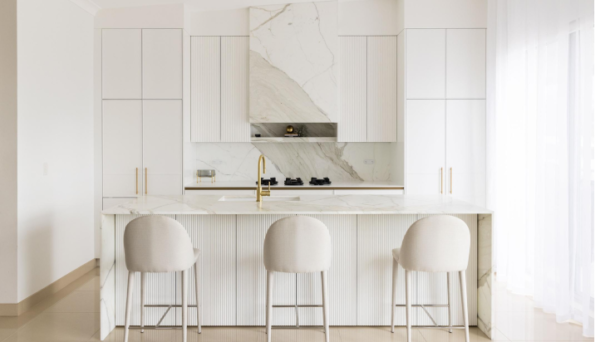
Natural stone has dominated kitchen surfaces and countertops for years. This material would give a cold feel to the kitchen, timeless beauty and strength that lend a touch of class and style to any kitchen. Much like other materials, it has its pros and cons. This article seeks to give an overview of various kinds of natural stones used in kitchens, together with their benefits and possible drawbacks, to guide you toward making a proper decision for your next kitchen project. Types of Natural Stone Used in Kitchens Natural stone has long been a choice for kitchen countertops because it personifies grace, strength, and character. Each natural stone has different advantages, so knowing them is vital in deciding on one. We’ll look at various types of natural stone used in kitchens. Marble Slabs Marble slabs are the epitome of luxury, sheltering in classic beauty. Veining patterns and colour variations give any kitchen marble slab a touch of elegance. Still, such excellence shows only through regular upkeep. Being a soft stone, this characteristic enables it to be carved with details, making it prone to scratches and stains. Yet, marble remains popular among those who want sophistication combined with timeless elegance. Granite Slabs Granite slabs are the most popular choice for kitchen countertops today because they are heat and scratch-resistant. They are available in various shades and patterns, making them suitable for every kitchen design. Since this stone is compact and dense, it gives excellent durability to the granite, making it resistant to heavy usage and perfect for any home with heavy kitchen activity. Quartzite Slabs Quartzite slabs are more rigid and resilient than marble; nonetheless, they vary in colour. They are remarkably resistant to heat and scratches and thus form an ideal choice for busy kitchens. Quartzite gives users the best of both worlds: marble’s aesthetic beauty with granite’s resilience. No wonder it is fast becoming the choice of everybody who wants beauty and durability combined in a kitchen surface. Dolomite Slabs Dolomite Slabs are highly beautiful, with a stunning combination of durability and visual appearance. They usually display soft white tones and come with wonderful veining. With an intermediate hardness between marble and granite, dolomite will present a perfect middle ground between looks and resilience. It gives emotion and quietness to any kitchen look while it’s more scratch-resistant and etching than marble, requiring medium maintenance. Limestone Slabs Limestone slabs are earthy and natural, added with a look that can bring out the rustic touch of any kitchen. Compared with other stones, they are softer and need more excellent care to avoid scratches and staining. Still, its kind of look can be so unique that it makes for a bold fashion statement. This stone is generally used in low-traffic areas like backsplashes and accent walls since it is among the more porous stones. Travertine Slabs Travertine slabs come in many earthy shades and are more or less porous in texture. As travertine is naturally soft and porous, its use is mainly restricted to backsplashes and flooring, and there are not so many countertops as it may bear heavy use in kitchens. However, with proper sealing and maintenance, travertine will give your kitchen a gorgeous, all-natural feel. Sintered Stone Slabs A sintered stone slab is made from natural stone powders to create a tough and non-porous surface. Due to this, sintered stone slabs are highly resistant to stains, scratches, and thermal shock, making them perfect for kitchen countertops. They combine the look of natural stone with the advantages of modern engineering, with many colours and patterns that will fit into any kitchen style. Porcelain Slabs Porcelain slabs are made from strong, dense clay baked at high temperatures to produce a surface that is scratch-, stain-, and heat-resistant. The colours and patterns employed on porcelain slabs are endless and different, although most have the appearance of natural stone. This makes them easy to clean and maintain, and that is what is making porcelain an increasingly popular choice for kitchen countertops. Pros of Using Natural Stone in Kitchens Due to related advantages, natural stone is among the most common materials used to prepare kitchen countertops and surfaces. It exudes an air of beauty, strength, and uniqueness, making it an excellent choice for traditional and modern kitchens. Here are the main advantages of using natural stone in your kitchen: Aesthetic Appeal and Timeless Elegance This gives a certain level of sophistication, coupled with luxury, to any kitchen. Then, there is individuality in patterns and veining unique to any marble slab or quartzite slab that can create visually striking effects not seen with synthetic materials. Such timeless beauty assures the stylish look of one’s kitchen for years to come. Each slab tells its own story with detailed, intricate details and naturally happening formations that have brought a little of the outside beauty indoors. Durability and Longevity Slabs made of granite, quartzite, and sintered stone have complex structures, bearing daily wear and tear without a fuss. Scratches, heat, and other types of damage will not have much effect on these materials. Many of these materials can hold their own for decades under proper care; therefore, in the long term, using natural stone will save you money by not having to constantly replace your countertops. Heat and Scratch Resistance One of the more prominent qualities that make granite and quartzite slabs highly coveted is their resistance to heat and scratches. You can put any hot utensils like pots and pans directly on their surface with no damage, and even cutting directly on the countertop won’t leave a mark. Natural stone is an excellent choice for a busy kitchen environment where functionality is as important as style. Unique Patterns and Colors No two stones are alike, so different colours and patterns are exposed. Be it the sharp veining in marble slabs or the subtle variations manifest on dolomite slabs, there is a natural stone to match each style and everyone’s taste. This makes for unmistakable character and personality

CONTINUE READING ➞
Wishlist
Recently Viewed
Categories