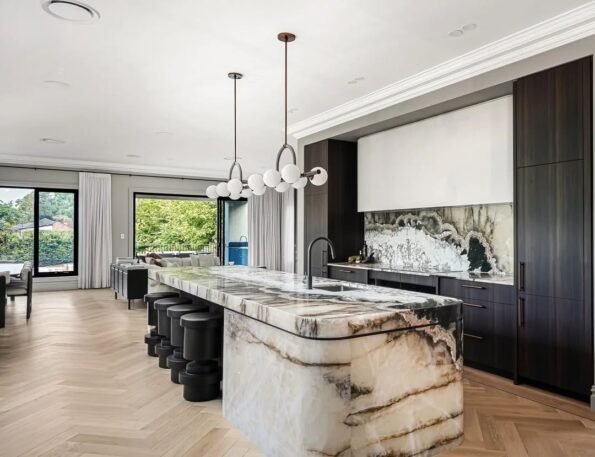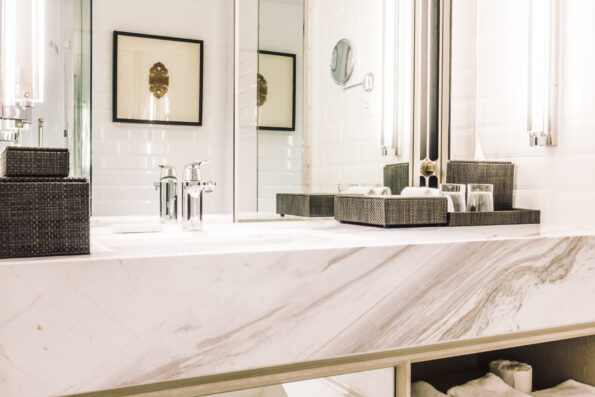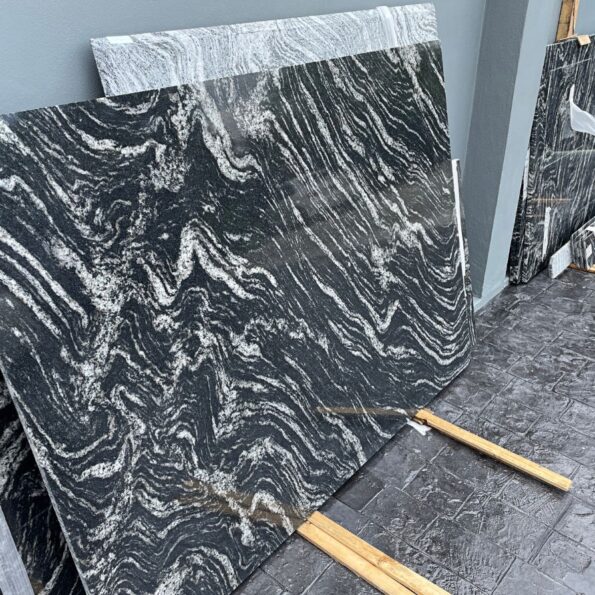

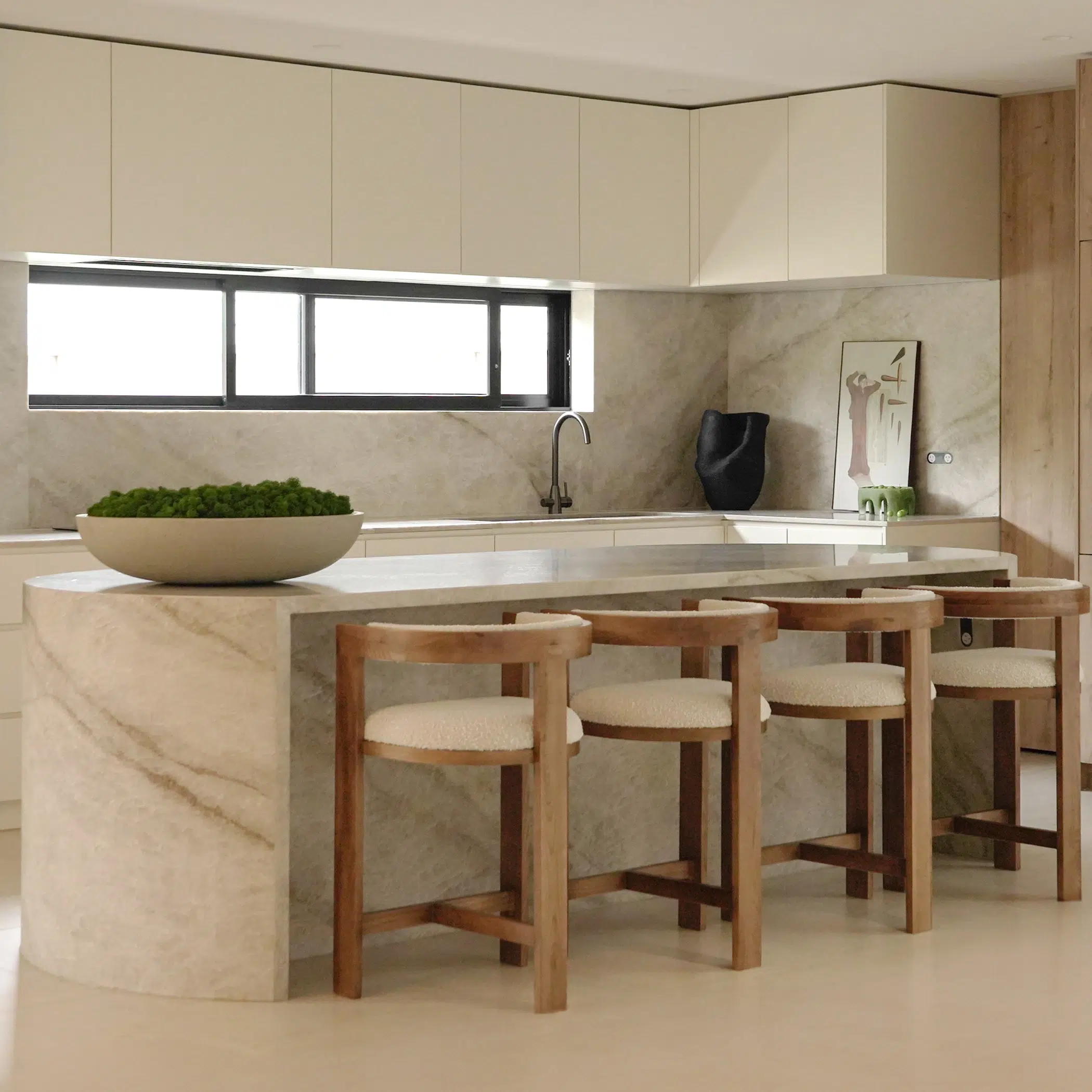
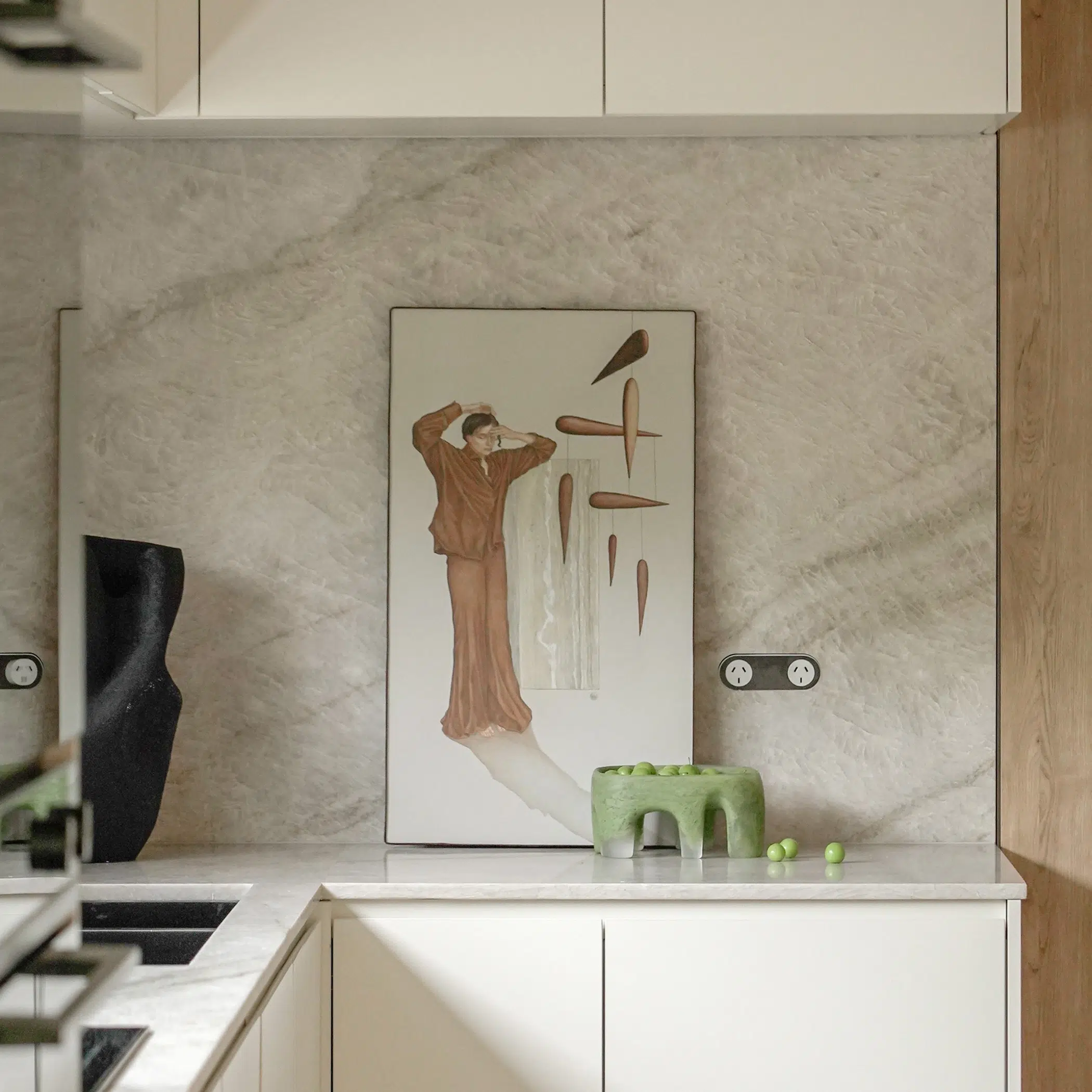
Taj Mahal quartzite has earned its place in Australian kitchens. Its warm beige backdrop, soft grey and caramel veining and calm, marble-like look make it one of the stones clients ask about most at our Greenacre showroom. Many people don’t realise how much one Taj Mahal slab can differ from the next until they see it in person. One is creamy and quiet, another is streaked with gold, and a third is almost white.
Choosing the stone is the easy part. Choosing the right slab is where a kitchen comes together. Here’s what to look for, what to ask and how to avoid the mistakes we see most often.
Make sure it’s genuine quartzite
Because the Taj Mahal is so popular, the name sometimes gets used loosely. Some stones sold under similar names behave more like marble or dolomite. That matters because durability is the main reason people choose it. Genuine quartzite is generally harder than marble, which helps it resist scratching, handle heat well and cope better with everyday spills. Hardness can still vary between quarries and batches.
The simplest safeguard is to ask the right questions. Ask your supplier to confirm the stone is classified as quartzite, which quarry it came from and whether they have technical data for that batch. A reputable supplier will be happy to answer, and the answer tells you which care routine to follow.
How to Compare Taj Mahal Quartzite Slabs
A sample shows you the colour family. It can’t show how the veins travel across a full slab, so always view the real thing before you decide.
Background tone: Taj Mahal runs from warm cream to a cooler, paler beige. Hold a cabinet door or timber sample against the slab. Warmer slabs suit oak and walnut, while lighter ones sit well with white, sage or charcoal joinery.
Veining: Some slabs have soft, cloudy movement. Others have stronger linear veins that look striking on a waterfall end but need more planning at the joins.
Fissures and cracks: Fine natural fissures are common in quartzite and are part of its character. A crack is different. It breaks the surface, catches a fingernail and often shows on the back of the slab. Ask whether any resin filling or repairs have been done.
Lighting: The Taj Mahal can look golden under warm showroom lights and much cooler beside a south-facing window. View it in daylight where you can.
Match the slab to your kitchen layout
Most people skip this step, yet it saves the most regret. Bring your kitchen plans with benchtop measurements, the island, any waterfall ends and the splashback if you want it in stone.
Slab size decides where the joins fall. Ask your fabricator to overlay your benchtop template on a photo of the actual slab, so you can see which part of the stone ends up where. It’s the easiest way to keep a feature section on the island and stop a heavy vein from landing across the sink cut-out.
If you need more than one slab, choose slabs cut from the same block and numbered in sequence. Sequential slabs usually have a similar tone and veining, which helps joins and book-matched splashbacks look deliberate. Some natural variation between slabs is still normal. Mixing slabs from different shipments is the quickest way to end up with an island that doesn’t match the back bench.
Finish matters too. Polished Taj Mahal deepens the colour and sharpens the veining. A honed finish feels softer and hides fingerprints, though it can show oil marks a little more readily.
Questions to ask before you reserve a slab
Before you put a hold on a slab, ask a few practical questions:
Has it been resin-treated or mesh-backed, and is that standard for this batch? What are its exact usable dimensions once any chipped edges or corners are excluded?
Are sister slabs from the same block available if your fabricator needs extra? Has it been sealed yet?
The good news is that Taj Mahal is easy to live with. Wipe spills promptly with a pH-neutral cleaner, and reseal as your supplier or sealer manufacturer recommends. With that care, it should stay looking great for many years.
Think about slab movement and feature areas
Not every part of a Taj Mahal slab needs to look equally busy. If your island is the main feature of the kitchen, look for a section with movement that works across the island rather than choosing a slab based only on its overall colour.
Pay attention to where the strongest veins sit in relation to cut-outs, joins and edges. A prominent vein can look excellent when it runs across an island or waterfall end, but less appealing if it disappears into a sink cut-out or is interrupted by a cooktop.
If you are using Taj Mahal for both the benchtop and splashback, also consider how the veining will continue between the two surfaces. Your fabricator can help determine whether the slab can be positioned to create a natural visual flow.
Find the right Taj Mahal slab for your kitchen
The right Taj Mahal slab comes down to more than choosing a colour you like. You need to confirm that you’re buying genuine quartzite, inspect the full slab, understand its natural variation and plan the layout around the stone’s strongest features.
Bring your kitchen plans, cabinet or timber samples and photos of your space when comparing slabs. Take your time to view several options side by side and ask about the slab’s origin, treatment, dimensions and matching slabs before placing a hold.
Our team at Greenacre in Sydney and Beresfield in Newcastle can walk you through current Taj Mahal stock and help you compare slabs for your kitchen. Call 02 9817 0037 (Sydney) or 02 8321 0742 (Newcastle) to book a visit.
FAQs
5 quick answersYes. Genuine Taj Mahal is hard and heat-resistant, and it’s far less prone to etching than marble, so it works well as a quartzite kitchen benchtop for everyday cooking. We still recommend chopping boards and trivets to protect any stone surface over the long term.
It’s a natural stone, so mineral content and veining change from block to block, and even within one block. That’s why viewing full slabs matters more than choosing from a photo or sample.
It depends on your bench lengths, your island size and whether the splashback is in stone. Bring your plans to the showroom, and we can help you estimate a realistic number before you reserve.
Sealing can help reduce the risk of staining, but the need and frequency depend on the specific slab and sealer used. Ask your supplier whether the slab has already been sealed and follow the recommended maintenance instructions for that stone.
Yes. Taj Mahal quartzite can be used for splashbacks, provided the slab and installation are suitable for the application. Using the same slab for the benchtop and splashback can also help create a more continuous look, particularly when the veining is carefully positioned.