

Taj Mahal Quartzite
Taj Mahal quartzite brings warmth to a space through its cream and beige background, delicate grey and gold veining, and natural mineral detail. Its gentle movement works comfortably with timber, painted cabinetry and a range of interior finishes. Explore ideas for benchtops, splashbacks and other applications, then compare available slabs with Avant Stone in Sydney and Newcastle.
What Is Taj Mahal Quartzite?
Taj Mahal is a natural quartzite quarried in Brazil. Its pale background and flowing mineral patterns offer a softer visual alternative to strongly veined stone, making it easy to work into both contemporary and traditional interiors.
Although its appearance is sometimes compared with marble, quartzite is a different material. It is valued for its hardness and suitability for everyday kitchen use, with care requirements that should be confirmed for the selected slab and finish.
Natural variation is part of its appeal. Some slabs have a quiet, creamy appearance; others show more pronounced movement. Compare our available Taj Mahal quartzite slabs or read our guide to choosing a Taj Mahal slab before your viewing.
Explore Available Taj Mahal Quartzite Slabs
A preview of our slab selection. Confirm current availability and viewing location with our team, or explore the full product page.
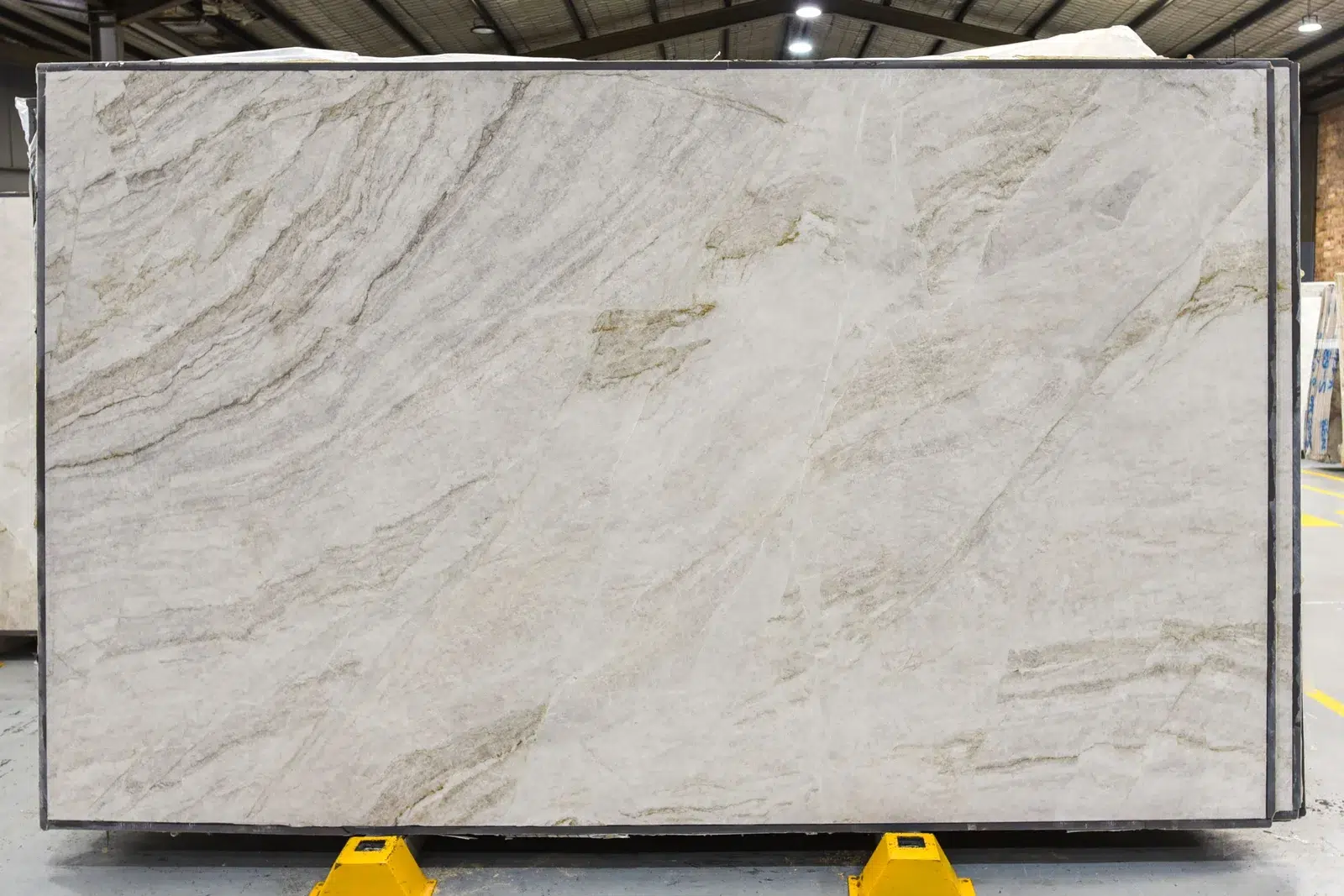 Taj Mahal — BV00473A
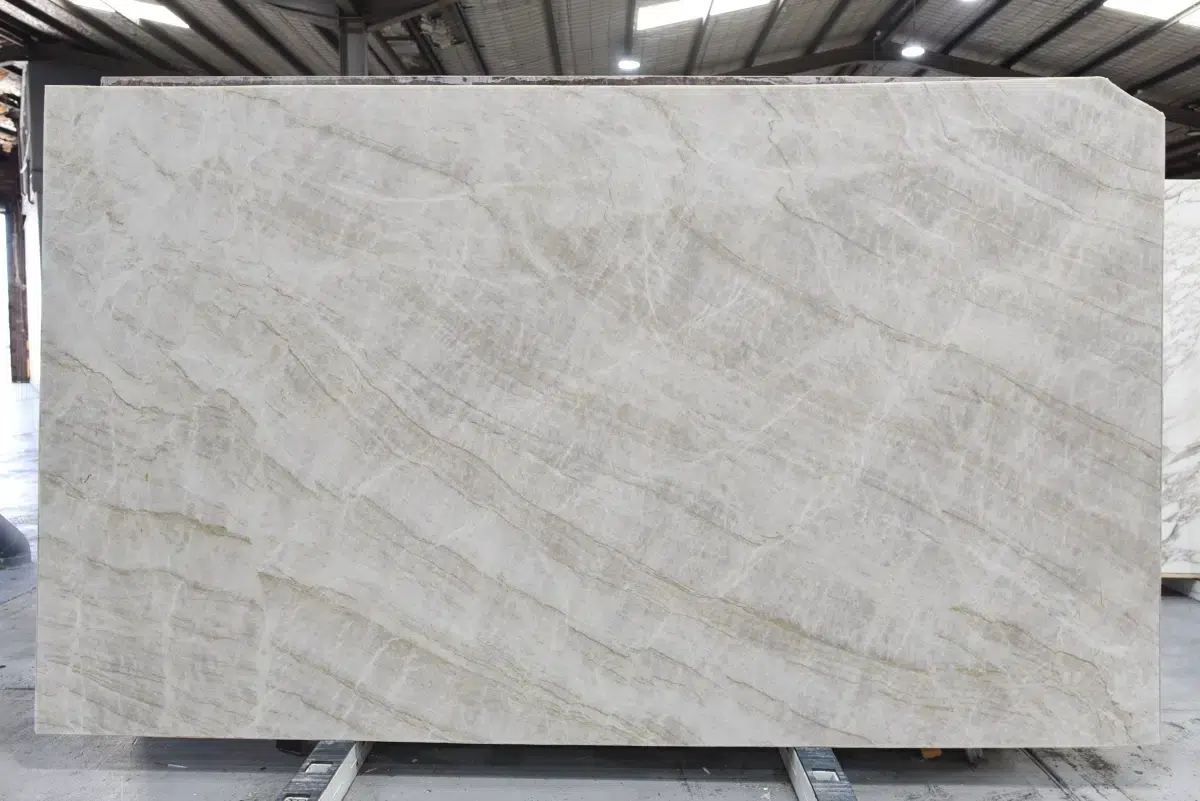 Taj Mahal — 34542G
 Taj Mahal — 9B24CR
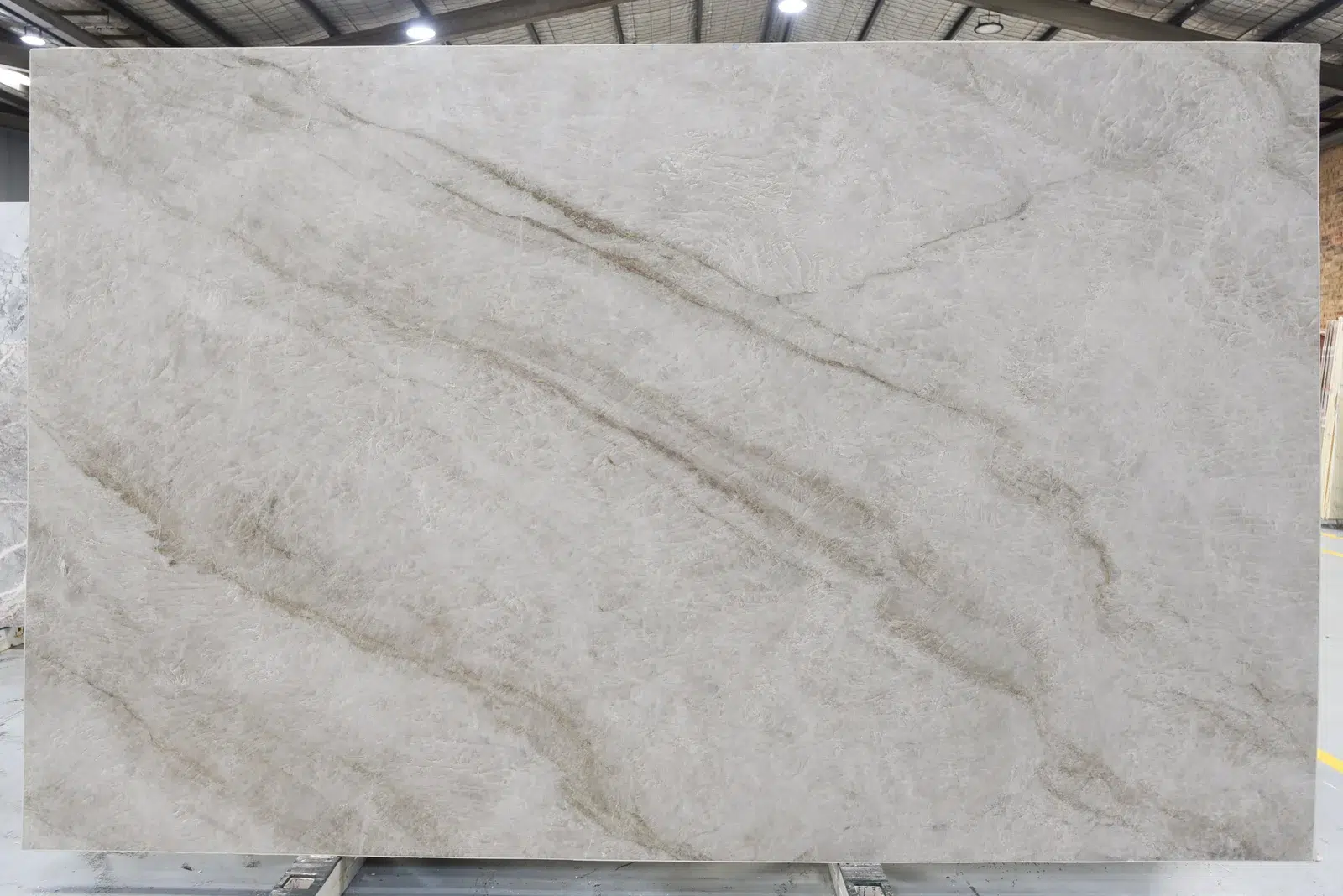 Taj Mahal — 1059
Explore Available Taj Mahal Quartzite Slabs
A preview of our slab selection. Confirm current availability and viewing location with our team, or explore the full product page.
Taj Mahal Quartzite Kitchen Benchtops
A Taj Mahal quartzite benchtop can bring a kitchen’s materials together, connecting timber cabinetry, painted doors and metal finishes through its warm neutral tones.
For an island, consider how the strongest veins will sit within the finished surface. A quieter section may suit a compact kitchen, while more visible movement can give a large island a focal point. Waterfall ends need careful planning so the pattern works across the horizontal and vertical faces.
Bring your kitchen drawings when comparing slabs. Your fabricator can then assess the layout, joins, cut-outs and support requirements before cutting begins.
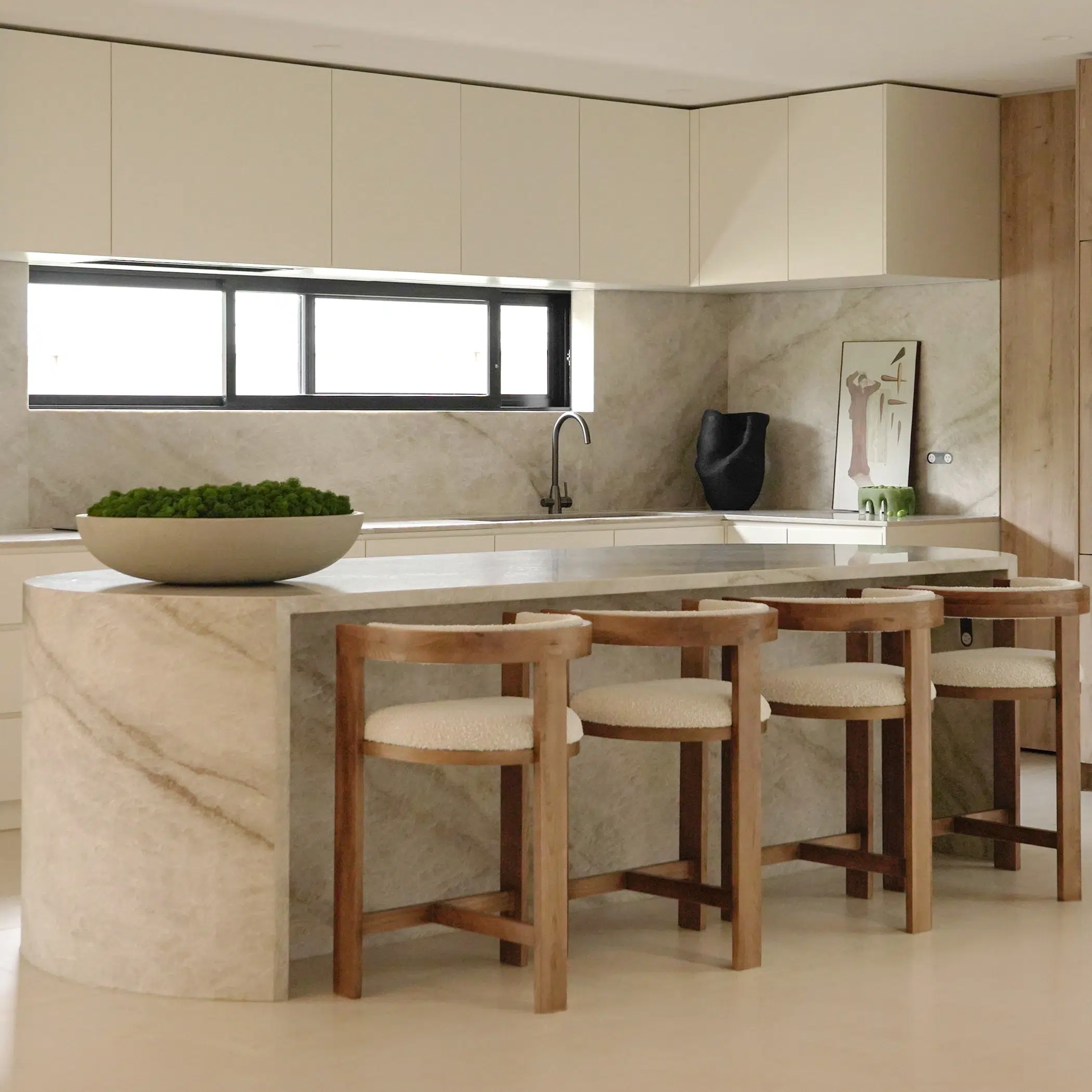
Taj Mahal Quartzite Splashbacks
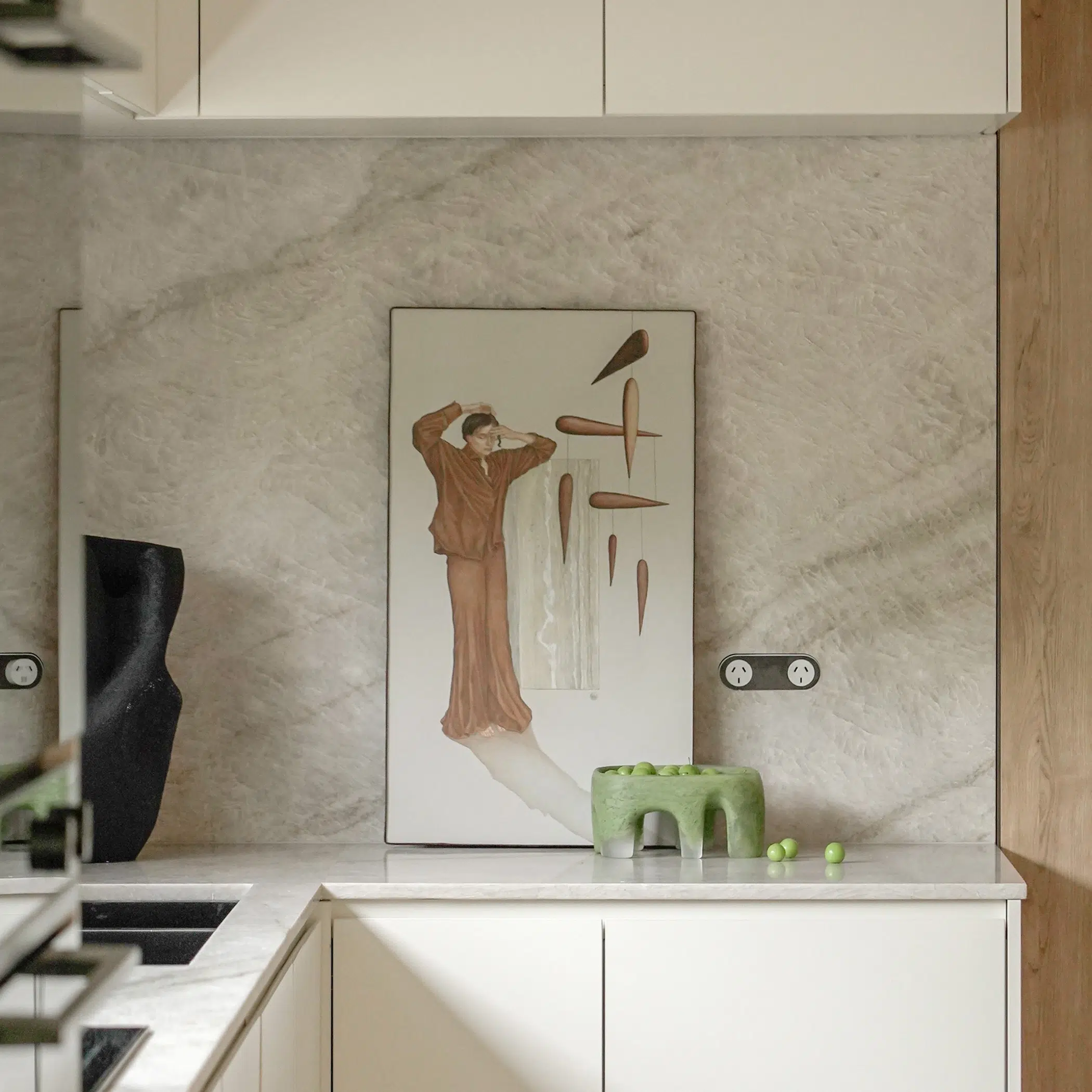
Using Taj Mahal quartzite for a splashback can connect the benchtop with the wall above, allowing its colour and veining to become part of the kitchen’s overall composition.
A full-height splashback gives the pattern more room to show. A shorter upstand creates a quieter detail. If you want the benchtop and splashback to feel connected, discuss slab selection and cutting orientation early.
Your fabricator should confirm the design, fixing method and clearances around cooking appliances.
Other Applications of Taj Mahal Quartzite
Carry the same material into adjoining spaces, or use it selectively where its pattern will have the most impact. The chosen slab, finish and installation details should suit the application.
Bathroom Vanity Tops
Taj Mahal quartzite can introduce warmth to a bathroom with pale tiles, timber cabinetry or brushed metal fittings. Consider how the pattern will sit around basins and tap holes, and confirm appropriate care for the finished surface.
Butler's Pantries
Repeating the kitchen stone in a butler’s pantry creates continuity between the two spaces. Plan both areas together so slab quantity, pattern and cutting layout can be assessed as one project.
Feature Walls
A vertical panel allows the stone’s movement to become a focal point. Review the full slab rather than relying on a small sample, and have the installer assess the backing and fixing requirements.
Fireplace Surrounds
Taj Mahal quartzite can form part of a considered fireplace design. Suitability, clearances and installation must be checked against the fireplace manufacturer’s requirements and the selected stone.
Taj Mahal Quartzite Finishes and Slab Variations
The finish changes how light interacts with the stone, while the individual slab determines its colour and movement. Compare both before making your selection. Finish availability varies between shipments.
Honed Taj Mahal Quartzite
A honed finish has a smooth, low-sheen appearance. It can suit kitchens where the stone should sit comfortably alongside matt cabinetry, natural timber and understated fittings. Compare a sample under your intended lighting to assess the effect.
Polished Taj Mahal Quartzite
A polished finish reflects more light and can make the stone’s mineral detail more noticeable. View it under different lighting conditions to understand how it will look beside windows and beneath kitchen lighting.
Natural Slab Variation
Background colour, vein direction and the amount of movement vary between slabs. Select the actual stone intended for your project, and discuss the relationship between adjoining pieces with your fabricator.

Cabinetry and Colours to Pair with Taj Mahal Quartzite
Begin with your preferred slab, then compare cabinet, flooring and metal samples against it. The stone’s undertone can change how neighbouring colours appear.
Natural Oak and Walnut
Timber cabinetry can draw attention to warmer tones within the stone. Compare the timber’s grain and colour with the slab so the two materials complement each other without making the space feel too busy.
Warm White and Cream
Warm white cabinetry can create a gentle transition into a pale Taj Mahal surface. Test the combination together: a strongly cool white may make the stone appear warmer than expected.
Taupe, Greige and Soft Green
Muted cabinetry offers a way to introduce colour while keeping the stone central to the design. Look for a tone that connects with the selected slab’s background or veining.
Charcoal and Dark Cabinetry
Darker cabinetry creates a stronger contrast with the stone. It can be particularly effective when a pale island or splashback is intended to stand out.
How to Clean and Maintain Taj Mahal Quartzite
A suitable cleaning routine and advice specific to your slab will help preserve its appearance. Care should reflect the stone’s verified characteristics, finish and any treatment applied.
Sealing
Ask your supplier or fabricator whether sealing is required and which product suits the stone. Resealing needs depend on the material, treatment and use; there is no single interval suitable for every installation. Sealing improves resistance to staining but does not make stone stain-proof.
Everyday Cleaning
Use a soft cloth and a suitable pH-neutral stone cleaner. Follow the cleaner’s instructions, remove residue and dry the surface. Avoid abrasive pads and cleaners containing acids.
Spills, Heat and Marks
Clean spills promptly, use chopping boards and place hot cookware on trivets. For persistent marks, seek advice before trying stain-removal products or abrasive treatments.
What Affects the Cost of Taj Mahal Quartzite?
The cost of a finished benchtop includes more than the stone. Slab selection, cutting layout, fabrication and installation all affect the quotation. Providing drawings and approximate dimensions makes it easier to assess what your project needs.
Slab Selection and Quantity
The selected material and number of slabs are important starting points. An island, splashback and waterfall ends may require more stone than the finished surface area alone suggests. Your fabricator can assess the cutting layout and usable material.
Thickness and Edge Design
Slab thickness and the finished edge are separate decisions. A thicker-looking edge may involve additional fabrication rather than a thicker slab. Discuss the appearance you want before comparing quotations.
Fabrication and Installation
Sink and cooktop cut-outs, joins, edge details, transport and site access can affect the finished cost. Confirm which services are included and who is responsible for each stage.
Comparing Quotations
Compare like-for-like specifications. Check the selected stone, finish, quantity, fabrication details, installation scope and GST treatment. A material-only price should not be compared directly with a supplied-and-installed quotation.
Taj Mahal Quartzite or Marble: Which Should You Choose?
Both materials offer natural variation, but appearance and everyday care can influence which one suits your project.
Appearance
Taj Mahal is often selected for its warm neutral palette and gentle movement. Marble offers a broader range of visual styles, from subtle patterns to strong contrasts. Compare actual slabs to find the character you prefer.
Everyday Use
Where the selected slab is verified as genuine quartzite, it is generally harder and more resistant to everyday acid etching than marble. Stones sold under similar trade names can differ, so confirm the actual slab’s material characteristics, treatment and care requirements with your supplier. Neither material is maintenance-free.
Making Your Selection
Consider how you cook, the appearance you want and the care you are comfortable providing. Bring material samples and kitchen plans to your viewing so the decision reflects the whole project.
Choose Your Natural Stone Slabs
Still comparing materials? Browse our wider collection to find the colour, movement and finish that suits your project.


Taj Mahal Quartzite Supplier in Sydney and Newcastle
Compare natural stone in person at Avant Stone. Bring your kitchen plans, cabinet samples and flooring selections to help assess how your preferred slab will work within the space.
Tell us which Taj Mahal finish or slab has caught your attention. Our team can confirm current availability, discuss slab details and help you arrange a viewing. Contact us before visiting to confirm the location of a particular slab.
Sydney showroom: 22 Reservoir Avenue, Greenacre NSW 2190
Phone: 02 9817 0037
Newcastle showroom: Unit 1, 8 Arunga Drive, Beresfield NSW 2322
Phone: 02 8321 0742
Email: info@avantstone.com.au
Frequently Asked Questions
What Is Taj Mahal Quartzite?
Taj Mahal is a natural quartzite from Brazil, recognised for its warm cream and beige tones and delicate veining. Its appearance varies between slabs, making full-slab selection an important part of planning a project.
Is Taj Mahal Quartzite the Same as Engineered Quartz?
No. Taj Mahal quartzite is a quarried natural stone. Engineered quartz is a manufactured surface. Similar names or colours do not mean the materials have the same composition or care requirements.
Can I View the Actual Slab Before Choosing?
Contact Avant Stone to arrange a viewing and confirm where your preferred slab is available. Seeing the full stone helps you assess its colour and pattern more accurately than a small sample.
Can I Use Taj Mahal for Both an Island and a Splashback?
Yes, subject to the selected slab and installation requirements. Plan both surfaces together so your fabricator can assess material quantity, cutting orientation and the relationship between the patterns.
Can a Taj Mahal Island Be Made Without a Join?
That depends on the island dimensions, usable slab size, cut-outs and handling requirements. Your fabricator should assess the proposed layout before a join-free design is confirmed.
Does Honed or Polished Taj Mahal Suit My Kitchen Better?
Honed has a lower sheen, while polished reflects more light. Compare both alongside your cabinet and flooring samples. The best choice depends on the selected slab, lighting and overall design.
Does Taj Mahal Quartzite Need Sealing?
Ask your supplier or fabricator for advice specific to the selected slab and any existing treatment. Sealing and resealing requirements vary; appropriate sealing can reduce staining risk but does not make the stone stain-proof.
What Should I Provide When Requesting a Quote?
Include your project postcode, intended application, approximate dimensions, preferred slab or finish, and available drawings. Mention splashbacks, waterfall ends and other stone surfaces so the full material requirement can be considered.